

A region of Greece where rugged cliffs, olive groves and stone towers dating back to the Middle Ages come together: the Peloponnese. This vast region, forming the southern tip of Greece, tells a unique story not only through the elegant streets of Nafplio, but also through the major transformations it has undergone throughout history, its distinctive civil architecture, its long-established wine production and its untamed wilderness.
Although the Peloponnese is renowned for its stunning coastlines and ancient cities, to truly understand the spirit of this region, one must look further south, deeper into its heart. Leaving the hustle and bustle of Athens behind to lose yourself in the labyrinthine streets of Monemvasia, hidden within the rock; climbing the hills of Mystras to trace the footsteps of its Byzantine past; or walking along the dramatic cliffs of Mani, pounded by the waves… Every stop on this route is like a layer, both physical and reflective.
In Mora, you can start your day early in the morning with a warm, freshly baked treat from the bakery in Aeropoli’s quiet stone square; in the afternoon, you can sample century-old wines from local producers; and in the late afternoon, after a swim in the turquoise waters of Elafonisos, you can watch the sunset in Kardamyli, in the shade of the olive trees. This is a landscape that is as epic as it is authentic and unvarnished.
In this guide, the routes are easy to follow and are not limited to standard routes, we offer a weekly journey that covers different corners of the peninsula: Gerakas, Gerolimenas, Vathy such as less well-known coastal and stone villages; enchanting Kastania and Diros caves; local wineries, unpretentious but authentic fish taverns, The dramatic coasts which served as the setting for the filming of The Odyssey, and carefully selected accommodation recommendations for the more authentic, wild and natural side of the Peloponnese.
You can reach all our Greece guides here from here.
If you’re ready, let’s get started.
Although Mora offers a different character in each of the four seasons, the ideal times to fully enjoy the landscape and the sea are spring (April–June) and autumn (September–October).
Spring: When nature awakens, every where is lush and green and and historic ruins (such as Mystras and Nafplio Castle) scorching heat without comfortably exploring on foot is the time of year.
Summer (July–August): Whilst it’s ideal for a seaside holiday and beaches such as Elafonisos, temperatures can be very high in the barren, rocky landscape of Mani. Furthermore, popular spots tend to get crowded.
Autumn: This is the most peaceful time of year for those who enjoy tranquillity, coinciding with the grape harvest and a time when the sea temperature is still perfect.
The golden rule for properly exploring this southern route of the Peloponnese: hire a car or travel in your own vehicle. It is virtually impossible to reach the region’s hidden fjords, caves and stone villages by public transport. Unless you’re heading to a single destination such as Monemvasia or Kalamata, travelling by car is essential.
Flights and Car Hire: The most convenient option is to fly to Athens Eleftherios Venizelos Airport and hire a car from there. Nafplio, our first stop from Athens, is about a 1.5–2-hour drive away. Alternatively, if you’d prefer to start the route in reverse, you could consider flights to Kalamata Airport. However, it is not an airport with a very frequent flight schedule.
By Car: If you are travelling from Turkey in your own car, after crossing at the Pazarkule or İpsala border crossings, you can take the motorway via Thessaloniki to Athens and from there on to the Peloponnese. On motorways in Greece, you will frequently pass through toll booths, where you can pay by card or in cash. As there are no petrol stations on the section of the motorway between Edirne and Thessaloniki, you will need to stop to refuel; however, assuming you have already filled up in Edirne, it is likely that this fuel will take you all the way to Thessaloniki.




Great Places to Eat
Reflecting the region’s unpretentious yet genuine character, here are our favourites along the route, ranging from traditional tavernas to modern chef-led restaurants:
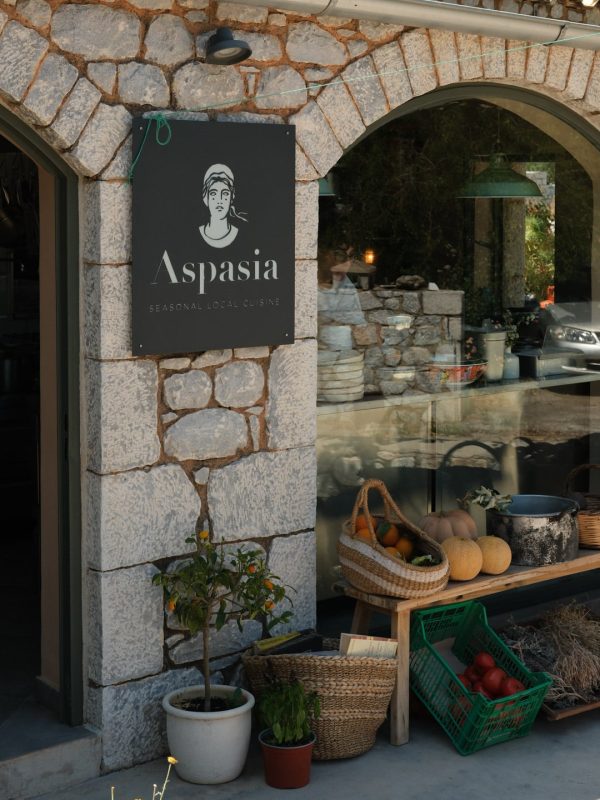
Reflecting Mani’s character, Aspasia (Stavri Village) features Chef Stavriani Zervakakou’s unhurried, seasonal and refined dishes.
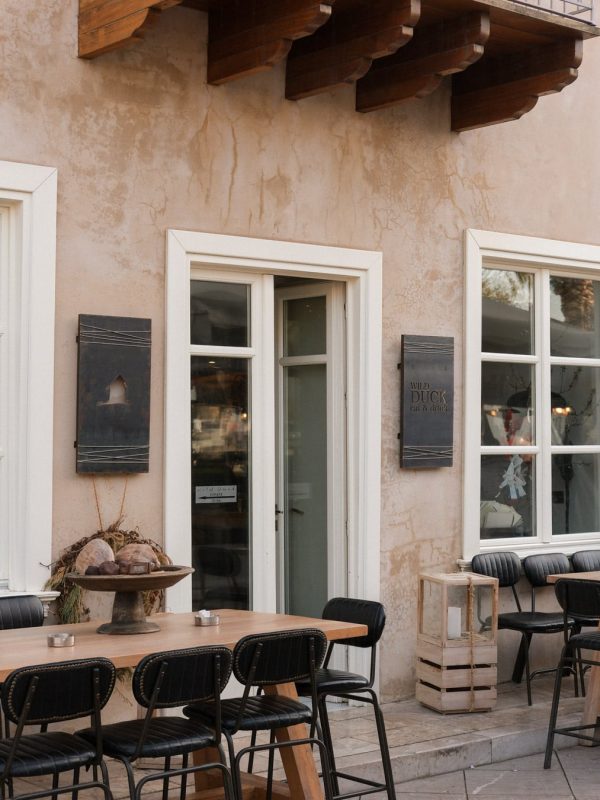
Wild Duck, in Nafplio, serving refined Mediterranean cuisine and offering an extensive selection of wines.
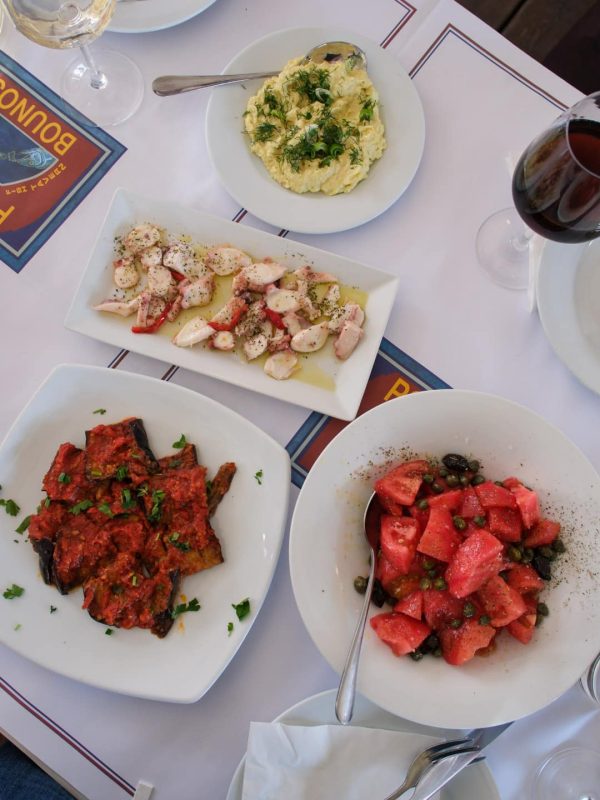
Nafplio marina fresh seafood specialities and classic taverna culture for, BOUNOS psarosavouras.
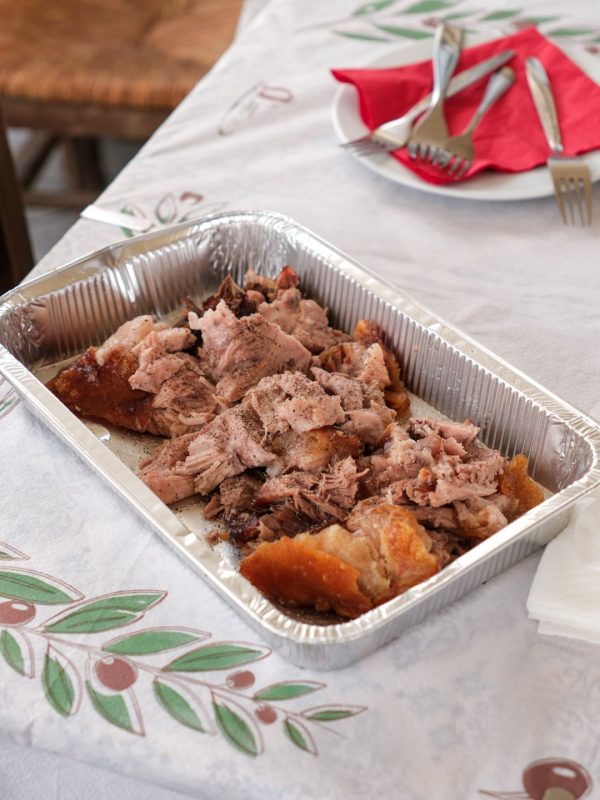
Rigani, a culinary stop-off on the motorway, is the place to go to sample Mora’s famous signature dish, the slow-cooked Gournopoula.
Fish Tavern Diamantis, where you can enjoy crispy fried fish and courgettes by the water’s edge, against the serene backdrop of Gerakas’s fjord.
Inside the Monemvasia fortress, Matoula Restaurant—which the locals strongly recommend—, Aktaion Restaurant for carefully prepared meze, and Athivoli Tavern for a warm, traditional atmosphere.
Set against the enchanting blue of Limeni, with its red wooden chairs by the shore, Thodora’s Place is the perfect spot for lunch and a break by the sea.
In Kardamyli, dim lights and centuries-old olive trees underneath evening dinner at, Old Kardamili Traditional Restaurant.
If you’re visiting Porto Cheli, head to Ktima Hinitsa for delicious food with a stunning sea view.
To recharge your batteries after the climb up Mystras with a generous portion of Greek salad and a slice of orange pie, head to Mystrasbistro.
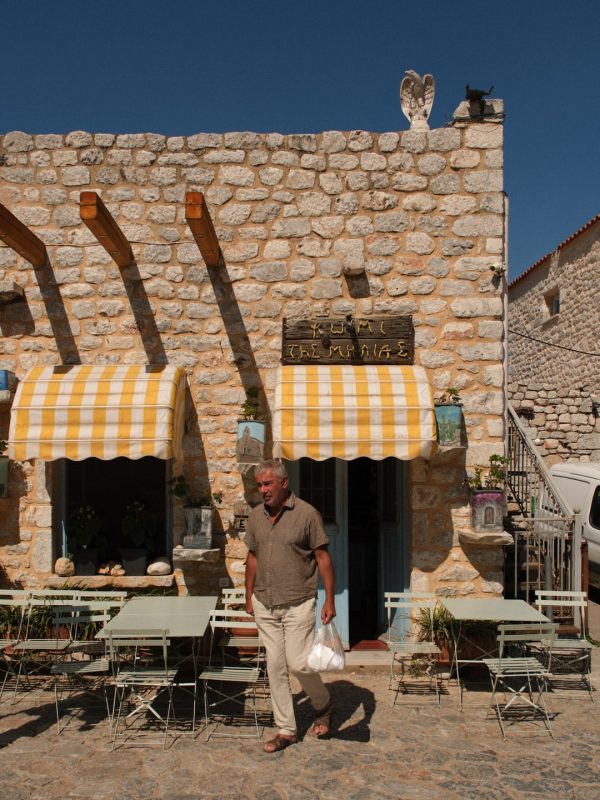
As you wander through the streets of Aeropoli, don’t miss out on those warm, fresh pastries with cheese from the historic bakery ‘Το Ψωμί της Μηλιάς’, or the local sweet treat similar to milk halva.
Wine Tasting Routes & Wineries
To sample the famous ‘Agiorgitiko’ red wine grapes of the Nemea region first-hand, visit Bairaktaris Winery and Karamitsos Winery.
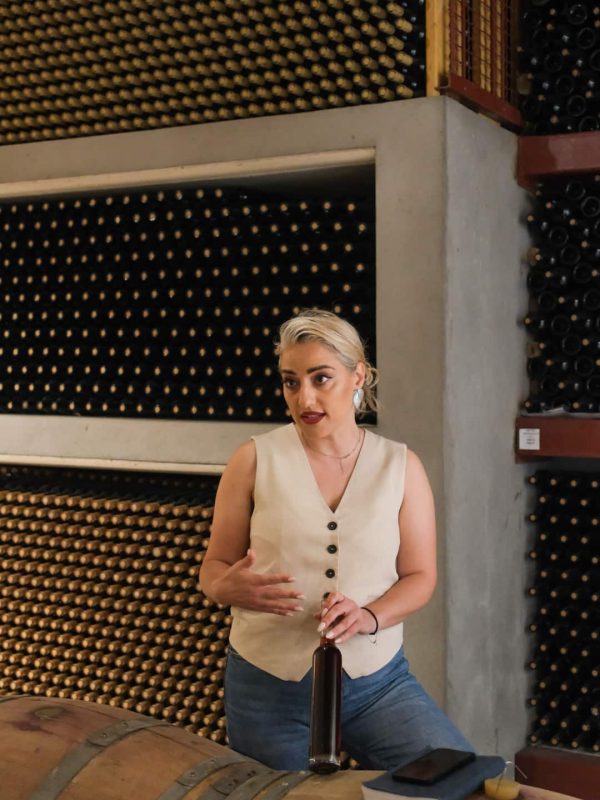
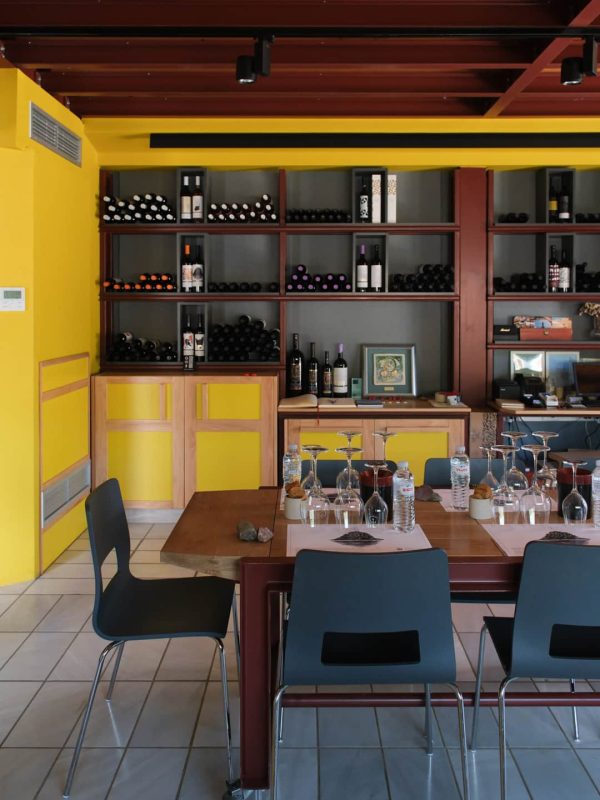
To get a closer look at the region’s long-standing wine culture in Monemvasia and to sample wines made from local grapes, visit the Monemvasia Winery.
Accomodation
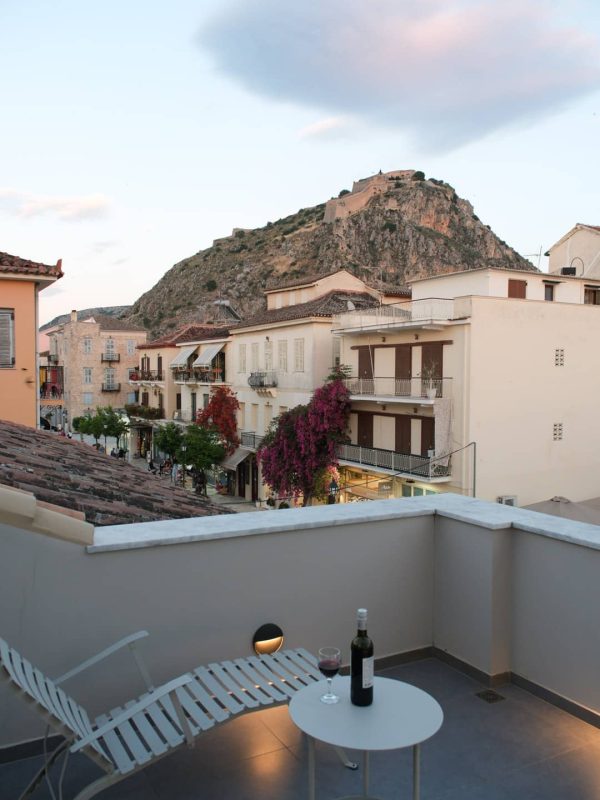
In Nafplio, Amalie Suites stands out for its minimalist and elegant design, offering views of the castle and the whole city from its terrace.
For those seeking a scenic, comfortable and dreamlike alternative on the mainland of Monemvasia, the Kinsterna Hotel.
On the Mani route, for those wishing to stay right by the sea in Gerolimenas, there is a boutique option: KaSeas Boutique Hotel.
A modest yet relaxing base in Kardamyli, with sea-view rooms featuring balconies and a swimming pool: Hotel Liakoto.
Places to Visit & Experiences There’s much more to Mora than just swimming; here are the ancient cities, caves and beaches that we definitely recommend you add to your itinerary:
With its shallow, clear, and sheltered sea, it is the most developed of the Mesudiye bays. It has a sandy-pebble beach, and there are plenty of facilities where you can rent umbrellas and sun loungers.
For a magnificent coastal walk in harmony with nature and a dip in the sea at small pebble beaches, try the Arvanitia Trail (Palamidi Path) and Neraki Beach in Nafplio.
On the slopes of the Taygetos Mountains, the vast ancient Byzantine city of Mystras Archaeological Site, notable for its architectural details (such as the Palace of the Despots, etc.).
The experience of jumping into the waters of the Aegean from Portello, the secret sea gate leading outside the walls of Monemvasia.
Well worth the steep climb to the summit: the 12th-century Church of Hagia Sophia on the edge of the precipice and the Upper City (Ano Poli).
A natural wonder, Kastania Cave, with its enormous stalactites formed over millions of years.
The Cave of Diros on the Mani Peninsula, where you can take an enchanting boat trip along the dark and cool underground river.
A tiny island reminiscent of the Caribbean, with its turquoise sea and fine white sand: Elafonisos.
Paralia Gialia, one of Mani’s most striking coves with its unspoilt natural beauty and no commercial facilities, and Dexameni Beach in Limeni.
The village of Vathia, with its abandoned tower-like houses, evokes a dramatic medieval atmosphere.
To take stunning photographs after the wine tasting, visit the Castle of Saint George (Nemea), carved into the mountainside, and Archaia Korinthos (Acrocorinth and the Temple of Apollo) for a journey into the depths of history.
Instead of changing hotels every night on this busy weekly itinerary, staying for two nights each at strategic locations and taking day trips is the most sensible option. Here are the accommodation bases we recommend along the route:
A Romantic and Comfortable Start (Nafplio): It’s a brilliant base for the first 1–2 nights. City life is vibrant, and it’s close to the surrounding ancient cities. With its terrace overlooking Palamidi Castle and its minimalist design, Amalie Suites was a delightful place to stay for us in this area. We’d also visited Nafplio, the first capital of modern Greece, on a day trip back in 2025, stopping off at places such as the ancient city of Corinth, Mycenae, Epidaurus and Porto Cheli along the way, and we’d even enjoyed a wine tasting at one of the vineyards in Nemea. This time, our itinerary was different: we started by staying one night in Nafplio.
A Historic Atmosphere in Stone-Built Rooms (Monemvasia): You can choose boutique hotels featuring stone architecture either within the medieval town nestled into the rock or in the nearby coastal villages. An evening stroll through the dimly lit streets inside the fortress is a unique experience. However, as the streets within the fortress are pedestrian-only, staying inside the fortress may slightly restrict your access to a vehicle during the day. We therefore recommend staying in a comfortable hotel with a view on the mainland rather than within the fortress itself. Here’s a dreamlike hotel recommendation we’ve found in this area: Kinsterna Hotel.
Mani / Kardamyli: Boutique hotels converted from the stone tower houses that embody the spirit of Mani, or eco-friendly stone villas nestled amongst the olive groves near Kardamyli, are ideal for relaxing and recharging your spirits during the final days of the itinerary. Whilst exploring the Mani region, we stayed at a modest hotel in Kardamyli: Hotel Liakoto.
We could say that this itinerary is for travellers looking for more than just lying on a sun lounger and sunbathing; as it is a little-known route in Greece, it is not a crowded destination but a more peaceful one.
For those interested in history, architecture and culture: It boasts a remarkable cultural richness, ranging from Byzantine ruins to medieval fortified towns, and from civil stone architecture to mythological tales.
For lovers of road stories and road trips: Ideal for those who enjoy driving along roads winding through steep cliffs, fjords and olive groves, and who are looking for a variety of experiences, from visiting caves to exploring ancient cities.
Foodies: For gourmets who seek out authentic Mediterranean and Aegean cuisine, local olive oils and regional wine routes in completely independent local tavernas, far from chain restaurants.
Those Travelling with Their Four-legged Friends: With nature walks, wide open spaces and dog-friendly beaches, this is ideal for those who love travelling with their pets.

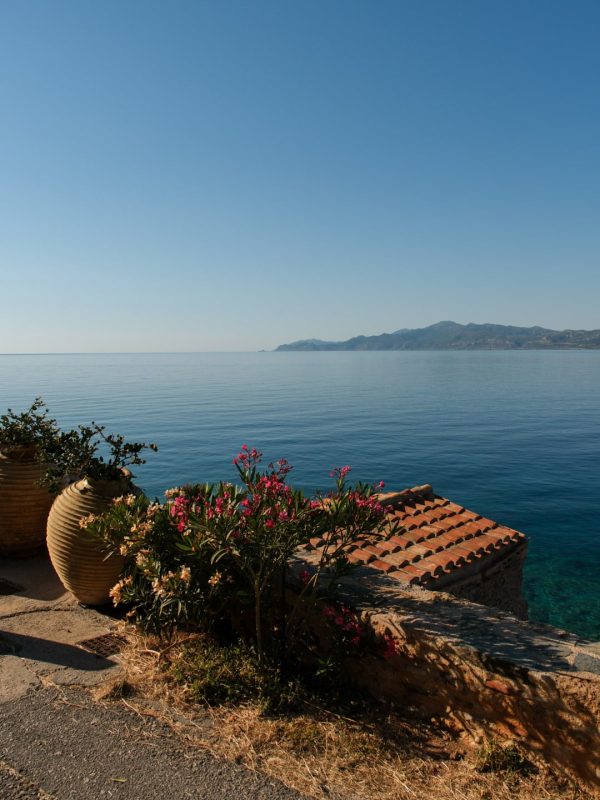


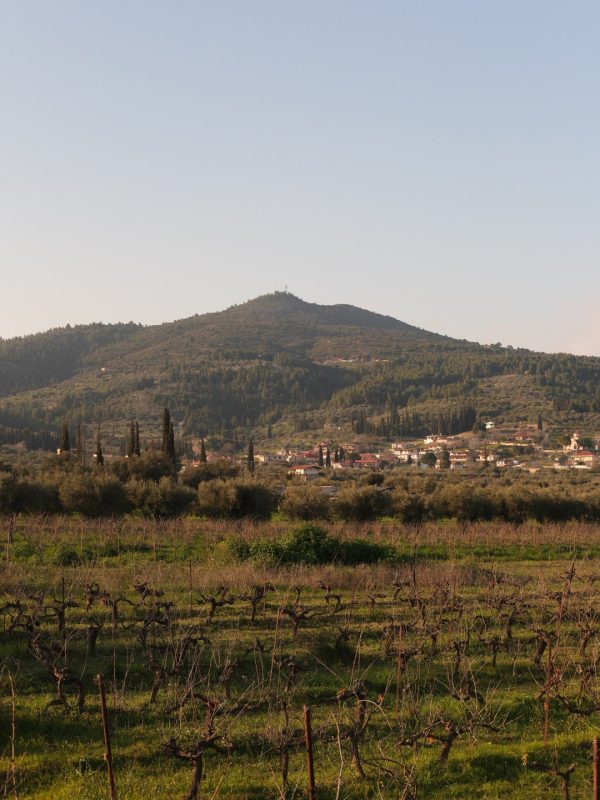


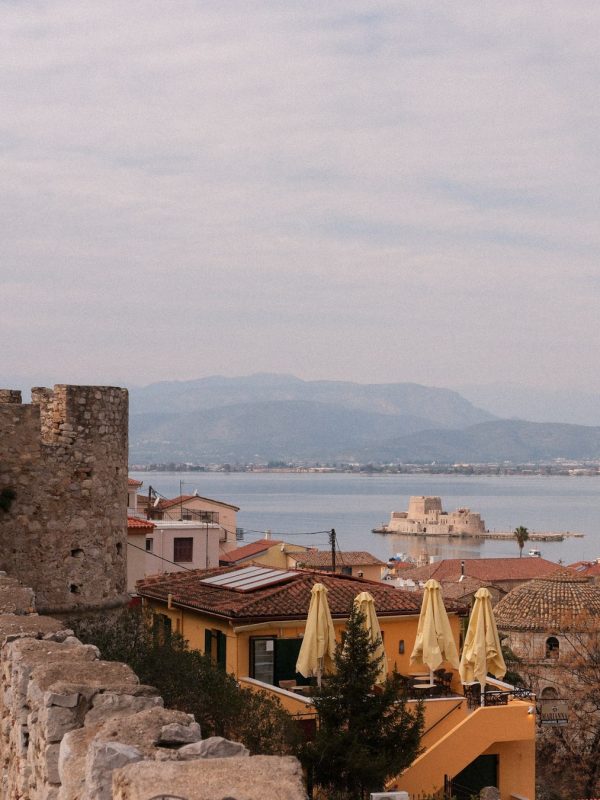


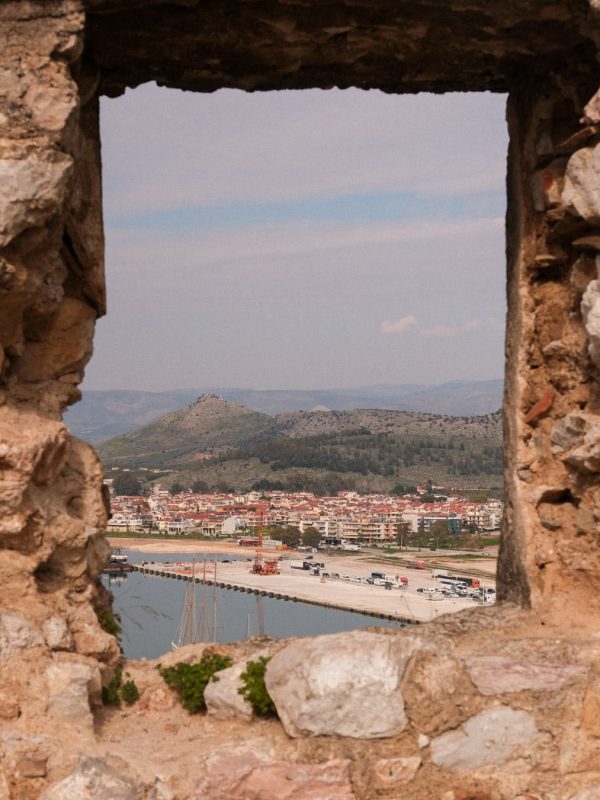
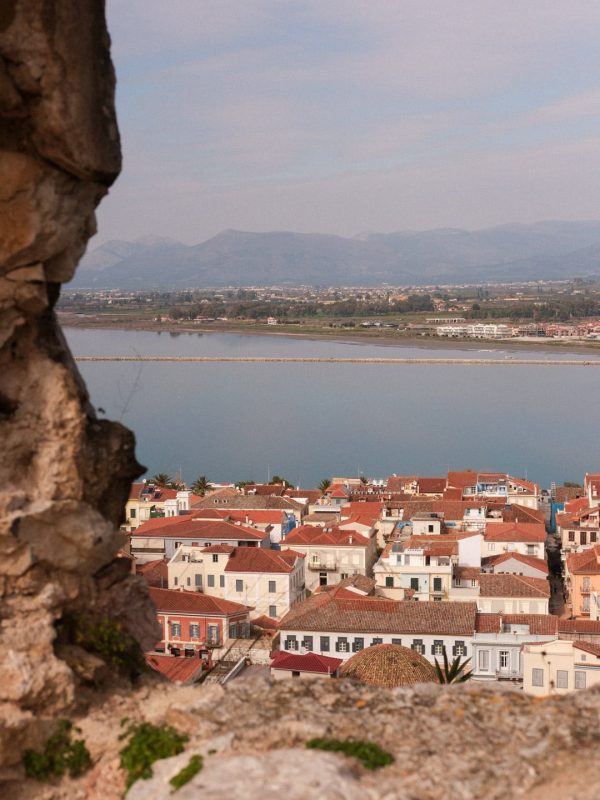


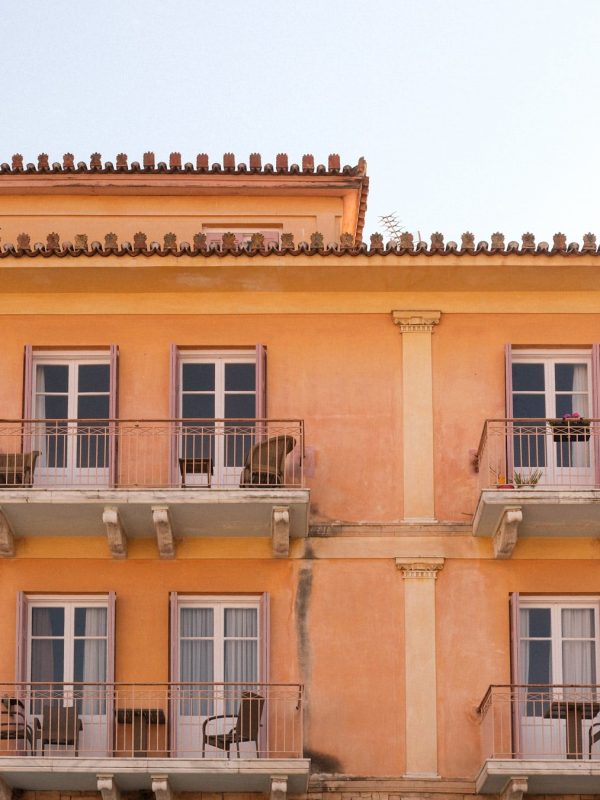


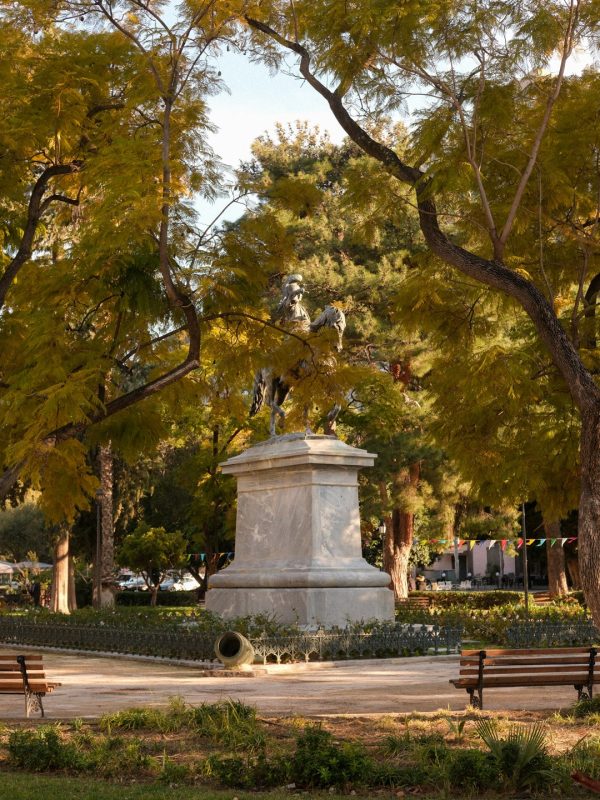


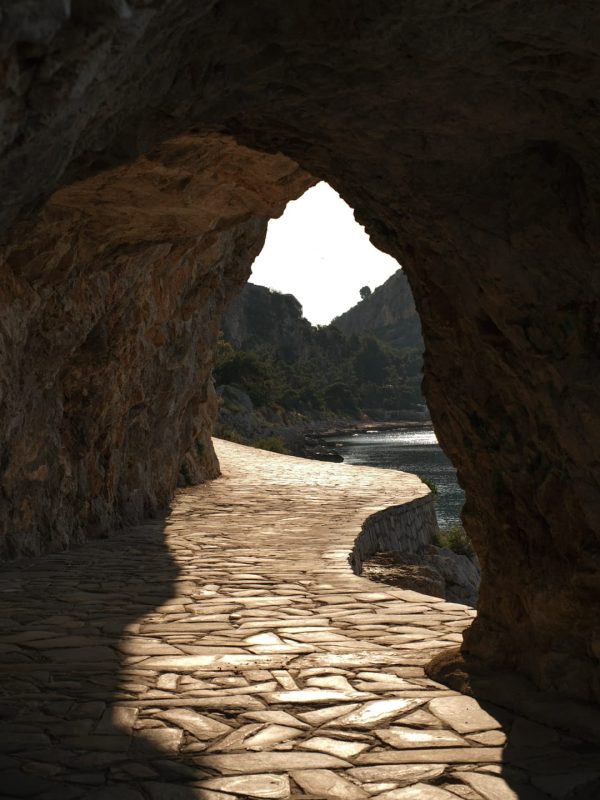
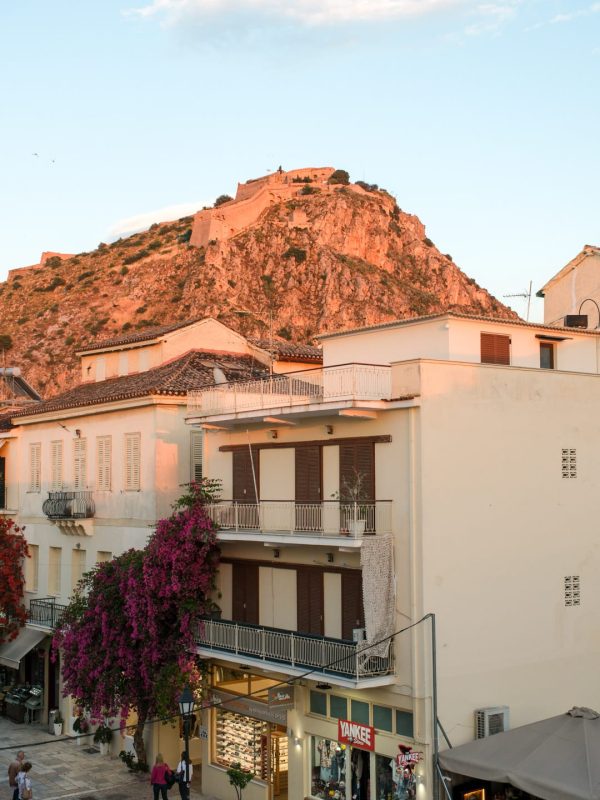



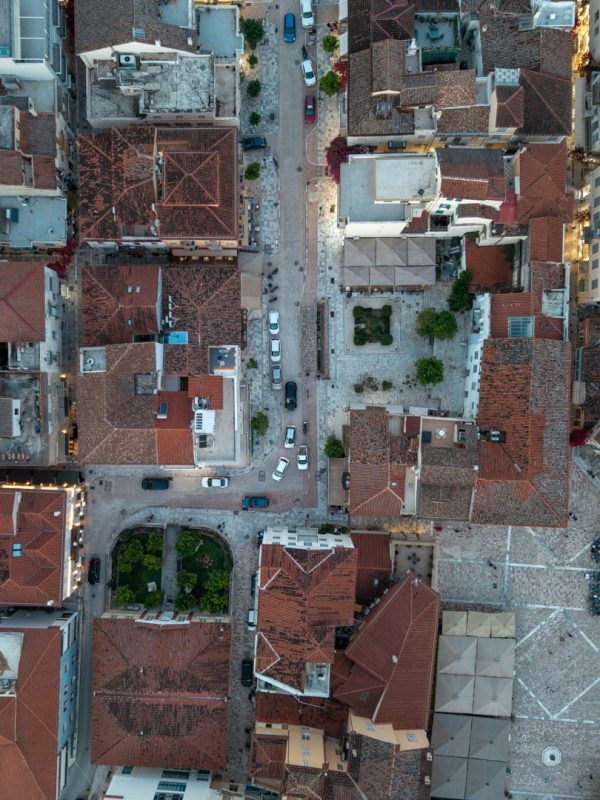
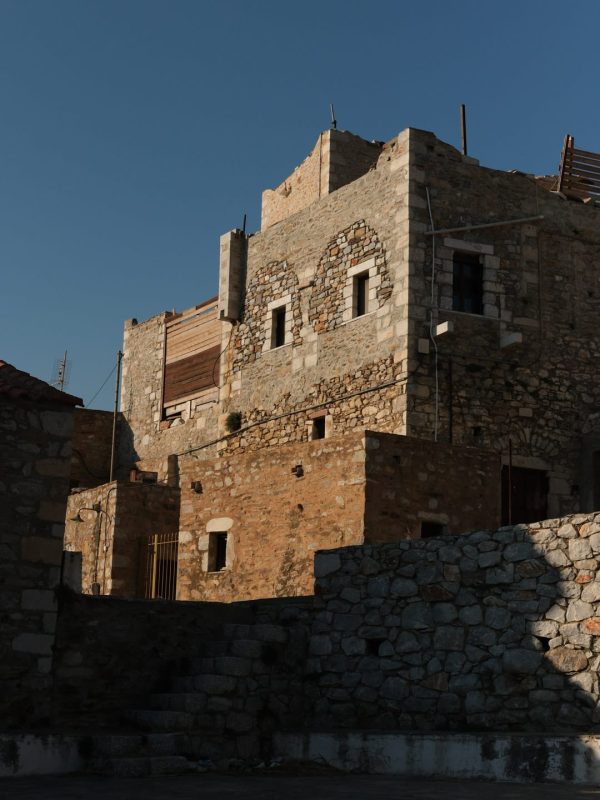
The first stop on the journey is Nafplio, situated in the east of the Peloponnese Peninsula, in the heart of the Argolis region, and which holds the distinction of being the first capital of modern Greece (1827–1834). As we approach the city, we are greeted by the magnificent silhouette of Palamidi Castle and the view of Bourtzi Island, set like a painting in the middle of the sea. The Venetian rule, which lasted from 1389 to 1540, imbued the city’s streets with the elegant, romantic and distinctive spirit of Italian architecture.
Places to Visit in Nafplio:
Syntagma Square: The city’s heart, surrounded by neoclassical and historic buildings on all sides, the ideal starting point for a coffee break.
The Archaeological Museum and the Church of Saint Spyridon: Key stops for understanding the city’s multi-layered historical fabric.
Palamidi Castle: A magnificent structure reached by climbing exactly 999 steps, offering a panoramic view of the entire bay.
Bourtzi Island and Fortress: Situated out at sea, this former Venetian defensive fortress is one of the city’s iconic landmarks.
Acronauplia Castle: The peninsula’s oldest castle overlooks the sea from the top of the sheer cliffs.
Arvanitia Walk: A magnificent coastal walking route where you can gaze out over the boundless blue of the Argolic Gulf, refreshing your mind and becoming one with nature. This walking route is known as the Palamidi Path; Paralia Arvanitias is one of the closest swimming spots to the centre of Nafplio. As of May, the beach club was closed, but there were still people swimming. It must be even livelier here during the season. If you follow the Palamidi footpath along the coast, you’ll find a few more coves that are unmanaged and even more peaceful. The beaches here mostly have small pebbly shores; we followed this path all the way to Neraki Beach.
Accommodation and Local Delicacies:
As our base in this picturesque town, we chose Amalie Suites, which stands out for its minimalist design and from whose terrace you can take in the whole of Nafplio and Palamidi Castle. Our room had a wonderful terrace.
Wild Duck, which is situated quite close to the harbour and which we had the chance to try during our visit last year, is our favourite. This Mediterranean restaurant, which stands out for its modern and refined touches, offers an extensive selection of wines. As well as dishes featuring oven-baked baby potatoes and fresh greens, options such as risotto and bruschetta are also excellent. For that classic Nafplio ritual – the familiar laid-back seaside meal – and fresh seafood, we once again headed to one of the tavernas along the same stretch: BOUNOS psarosavouras. All the seafood we ate was delicious; the tarama was a bit too salty, but the flavour was spot on in all the other dishes.
Nearby Surrounding Area Route: Citrus Orchards to Nemea 🍇
After exploring Nafplio to your heart’s content, you can take that delightful road winding through the citrus groves and head for Nemea, one of Greece’s famous wine regions. Known in particular for the ‘Agiorgitiko’ variety of red wine grape, this fertile region is a wonderful stop to trace the origins of local production. That’s exactly what we did last year on our return journey from Nafplio to Athens. This year, we didn’t stop off at Nemea or nearby Mycenae.
Tips for Wine Tasting in Nemea: To experience the local wine culture in depth, be sure to include Bairaktaris Winery and Karamitsos Winery—two of the region’s long-established producers—on your itinerary.
Castle of Saint George: Rising directly opposite the wineries and appearing as though it has been carved right into the sheer mountainside, this castle is a unique vantage point for capturing stunning shots after a wine tasting.
Alternatively, Epidaurus with its ancient theatre and its turquoise-coloured shores Porto Cheli It’s quite close to Nafplio. If you go to Porto Cheli, you can enjoy delicious meals with a wonderful sea view at a restaurant called Ktima Hinitsa. It is also quite close to the islands of Spetses and Hydra. You might want to add a few more days to your itinerary to visit these islands.
Last year on the way back I delved into the depths of history once more to descend into the depths of history a8> time more to delve into Archaia Corinth’s (Ancient Corinth) we had stopped for a break. On our way back to Athens, on the way to Acrocorinth and Temple of Apollo visit it. This time, we’re heading from here to explore the southern parts of the Peloponnese Peninsula towards Mystras. a33> from here Mystras towards we continued on.
As we bid farewell to Nafplio’s elegant atmosphere and headed south, we stopped off briefly at a restaurant called Rigani to take part in a special ritual celebrating the region’s local cuisine. Our aim was to sample gournopoula, one of the most iconic dishes of the Peloponnese (particularly the Messinia and Kalamata regions). This traditional pork dish, slowly roasted whole over a wood fire, is so famous for its incredibly tender meat and salty, crispy skin that, from the very first bite, you realise just how true that popular rumour is – that Greeks travel all the way down from Athens to the south at weekends just for this delicacy.
Following this brief yet memorable dining break, our route takes us to that disciplined and legendary city of the ancient world, Sparti (Sparta). After paying our respects to the magnificent Statue of Leonidas (Leonidas Statue), erected in memory of the famous commander and towering over the centre of the modern city, we proceed to our main destination, the Mystras Archaeological Site.
Perched on a steep slope of the Taygetos Mountains, this vast ancient Byzantine city—with its churches, palace ruins and narrow stone streets—is a multi-layered, veritable treasure trove for lovers of architectural history. In this impressive area, which requires a bit of climbing and exploration, there are three key structures that stand out for their architectural detail and are an absolute must-see:
Palace of the Despots: A complex situated on one of the hill’s commanding vantage points and one of the most magnificent examples of Byzantine palace architecture. It has recently been restored and reopened to the public.
The Holy Metropolitan Church of Saint Demetrius: One of Mystras’s oldest and most important religious centres.
Holy Church of the Virgin Mary Peribleptos: A monastery church with a unique atmosphere, thanks to its immaculate frescoes and architecture that is partly integrated into the rock.
Visitor’s Note: Admission to this vast open-air museum is €20 per person. You can easily purchase your tickets online via this link.
After this historic and strenuous walk along the sloping streets, as we trace the footsteps of bygone eras, we take that much-needed refreshing break at Mystrasbistro, situated just below the square. The generous Greek salad we eat here – dressed in olive oil and packed with ingredients – followed immediately by a delicious orange pie, provides more than enough energy for our next stop.




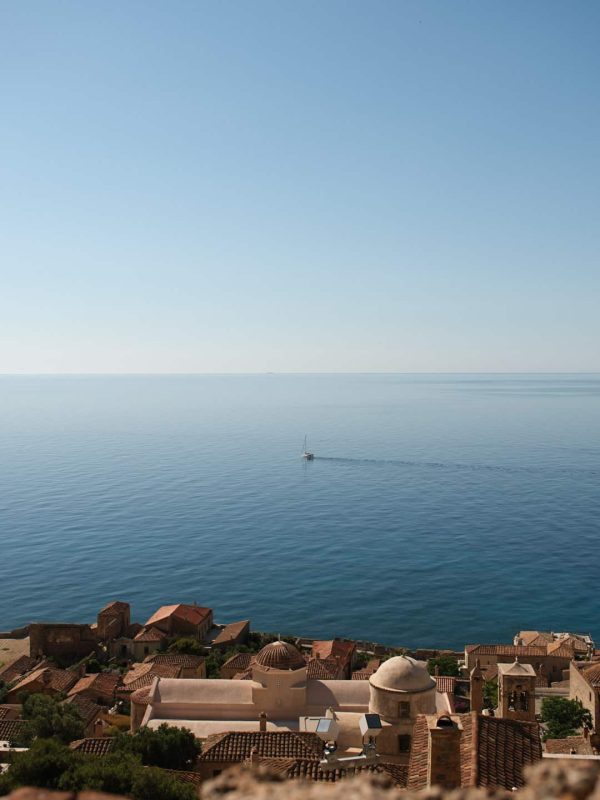
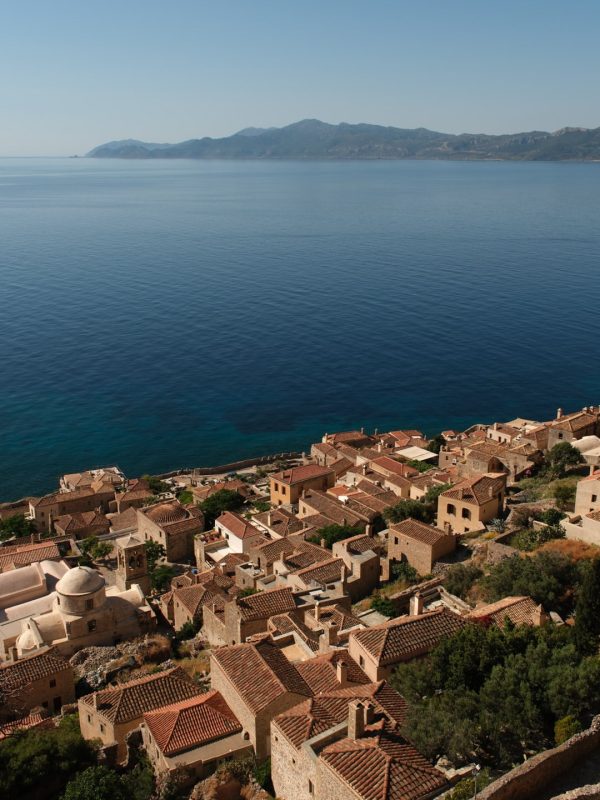


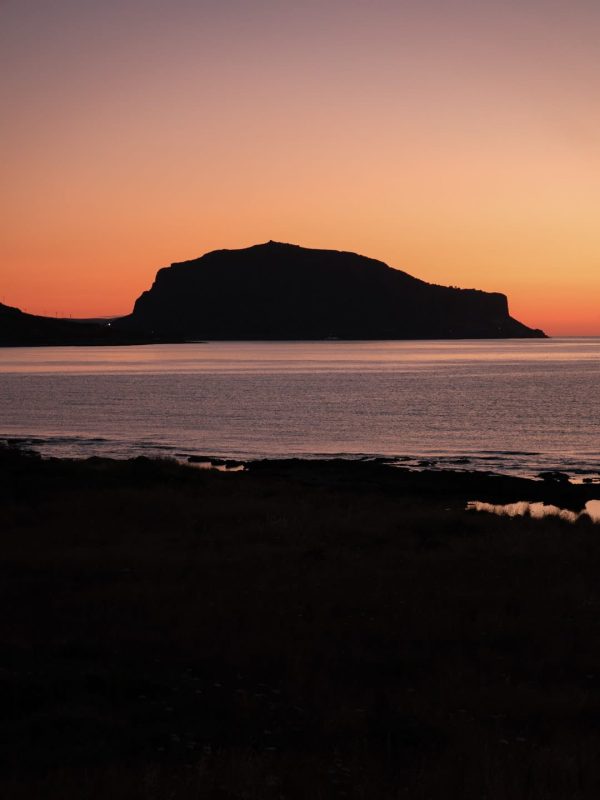





We arrive at Monemvasia, a medieval town carved into a massive rock in the middle of the sea, connected to the mainland by a slender bridge. Deriving its name from the Greek words mone (single) and emvasia (entrance), this fortified town is not merely a tourist stop; it is a unique urban heritage site where you can lose yourself in its cobbled streets and slow down the passage of time. The fact that the town is completely ‘invisible’ when viewed from the mainland is a magnificent example of architectural ingenuity, designed to protect the town from pirate raids. The ban on motorised vehicles entering through the castle gate ensures that you can only explore the narrow streets on foot, helping the town to preserve its slow rhythm, just as it has for centuries. The famous Greek poet Yiannis Ritsos’s description of his hometown as ‘a ship of stone’ is the definition that best captures the place’s dramatic spirit.
Step Step Monemvasia Discoveries:
Lower Town (Kato Poli): The heart of the city. As we stroll through the narrow, cobbled streets, we admire the historic houses with their intricate stonework, the shops of local craftspeople and the buildings that have been restored to their original state.
Yiannis Ritsos Müzesi: Kalenin kapısından girer girmez bizi karşılayan tarihi taş ev, şairin doğup büyüdüğü yer. Kente duyduğu derin bağın ve edebi hafızanın izlerini sürmek için harika bir başlangıç noktası.
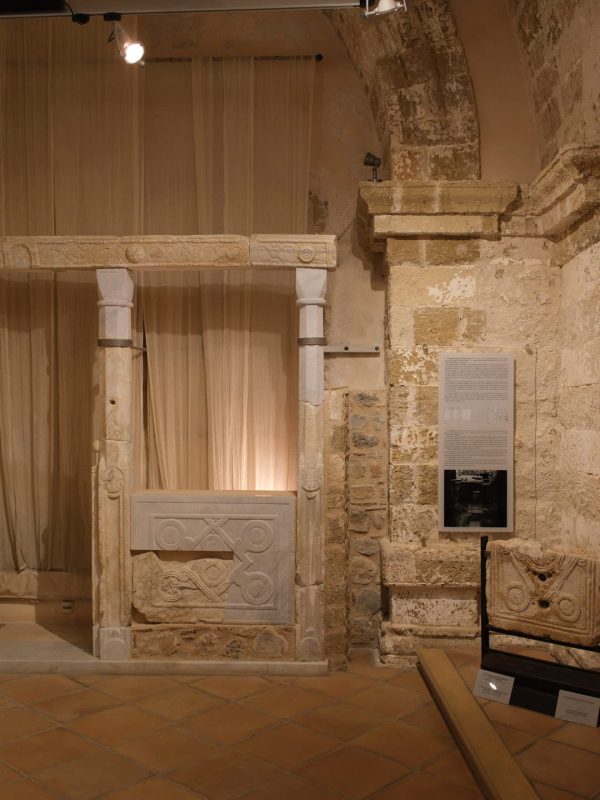
Christos Elkomenos Square and the Archaeological Collection: This square, the heart of the lower town, is the perfect spot for a coffee break. In the collection, housed in a former 16th-century mosque on the square, you can see the castle’s multi-layered architectural history, as well as exquisite Byzantine marble work and ceramics.
Upper City (Ano Poli) and Hagia Sophia Church: The steep climb to the summit is definitely well worth the effort. Perched on the edge of the cliff, the 12th dating back to the 12th century, the Church of Hagia Sophia, when you reach it, the whole Aegean Sea unfolds before your eyes at your feet with a magnificent panorama.
Portello: A secret sea gate leading outside the walls. Diving into the cool waters of the Aegean in the shadow of the medieval walls is one of the most exclusive and refreshing experiences to be had at this castle.
The Region’s Wine Culture and Culinary Highlights
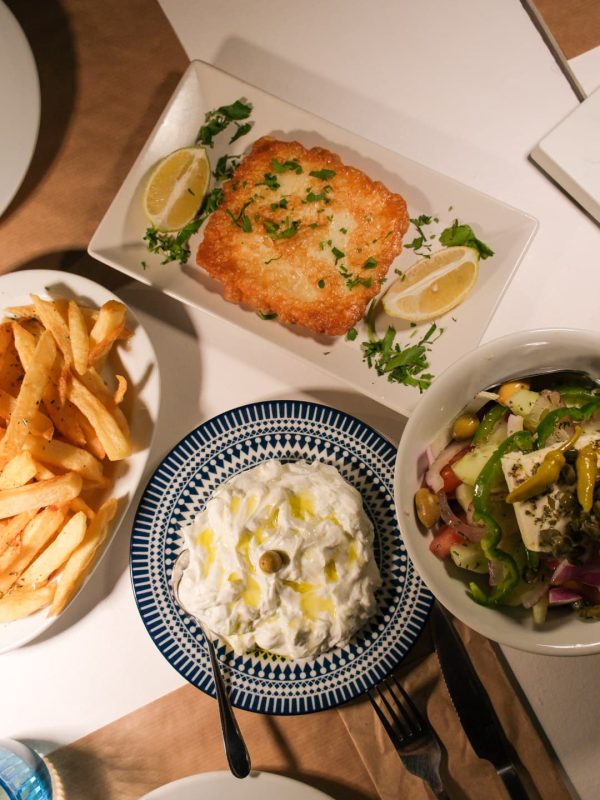
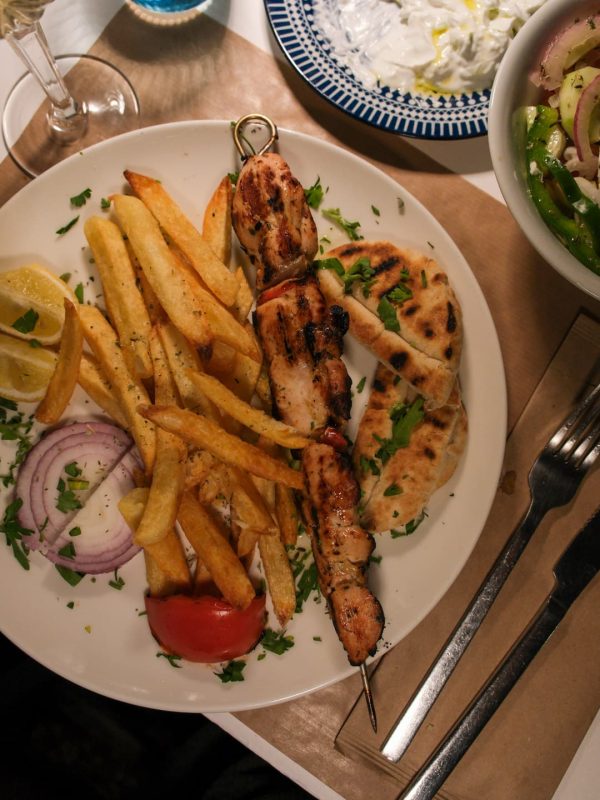
Monemvasia is not only renowned for its well-preserved architecture, but also for its rich wine culture and cuisine. We stop off at Monemvasia Winery for a wonderful break to sample wines made from local grapes that reflect the character of the region. Whilst wandering the streets of the Lower Town, Matoula Restaurant becomes our top choice for dinner, following the locals’ insistent recommendations. Furthermore, Aktaion Restaurant, which serves carefully prepared meze in a castle-like atmosphere, and Athivoli Tavern, for those seeking a more traditional, cosy setting, are excellent alternatives on the itinerary.
As we leave the historic heart of Monemvasia behind and head a little further north along the coast, we are greeted by the tranquillity of the Port of Gerakas, which is almost reminiscent of a fjord. At Fish Tavern Diamantis, situated right on the water’s edge in that peaceful harbour, we enjoy an unforgettable, unpretentious yet utterly authentic local culinary experience, featuring crispy fried fresh fish, thinly sliced fried courgette and syrupy desserts served at the end of the meal.
As we glide towards the southern tip of Mora, just before reaching the island, we stop off at Kastania Cave, one of the region’s most impressive natural wonders. This enchanting walk through the vast stalactites and stalagmites, formed over millions of years, into the depths of the earth can only be undertaken as part of guided tours held at specific times. The mystical atmosphere inside and the geological architecture patiently sculpted by nature are truly a sight to behold.
Tucked away at the southern tip of Lakonia lies a geopark that harbours a 2.5-million-year-old secret. Agios Nikolaos Geopark.
A 2.5-million-year-old forest: The ‘rocks’ along the coast are actually fossilised palm trees and their roots! Volcanic activity has slowly turned this ancient forest to stone beneath the sea. Open-Air Museum: You can swim amongst ancient marine creatures and mussel fossils beneath the water. The Captain İsmail Hakkı Wreck: Just 100 metres off the coast of Agia Marina lies a 500-tonne Turkish merchant ship that sank in 1978. What’s more, it lies at a depth of just 12 metres. A Snorkelling Dream: Simply grab your mask and glide over both the petrified forest and this impressive 30-metre-long wreck, all within the same cove.
Following our cave adventure, we stop for a quick meal in the coastal town of Neapoli before boarding the ferry to Elafonisos. We take a seat at an Italian restaurant called Le Farfalle, situated right by the sea. To be honest, based on our own experience, this place doesn’t go beyond being an ordinary restaurant and fails to offer a memorable culinary experience. Nevertheless, if you’re looking for a quick, practical and filling meal whilst waiting for the ferry, with a sea view and a menu featuring mainly pizza, pasta and salads, it’s worth considering.
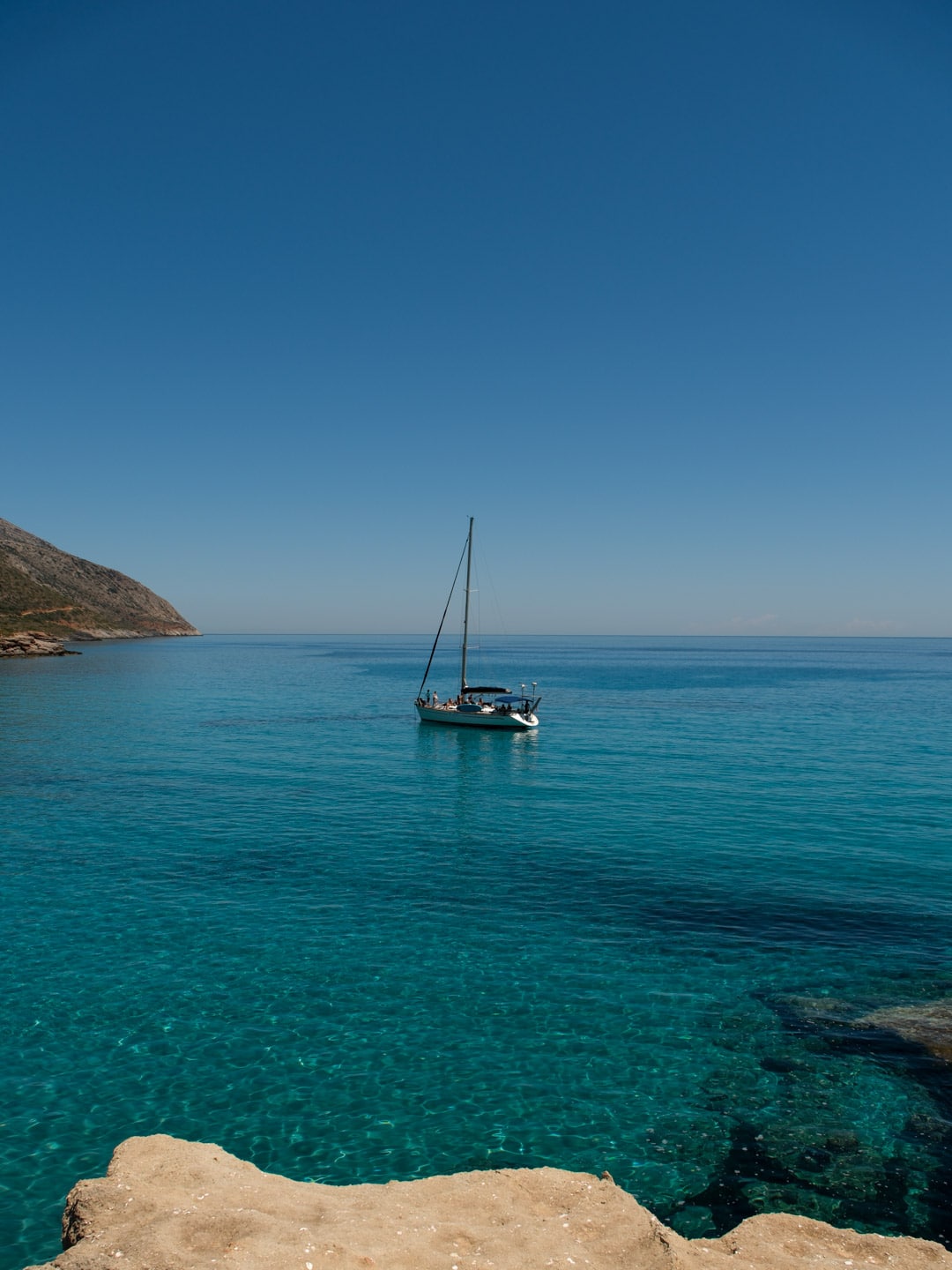
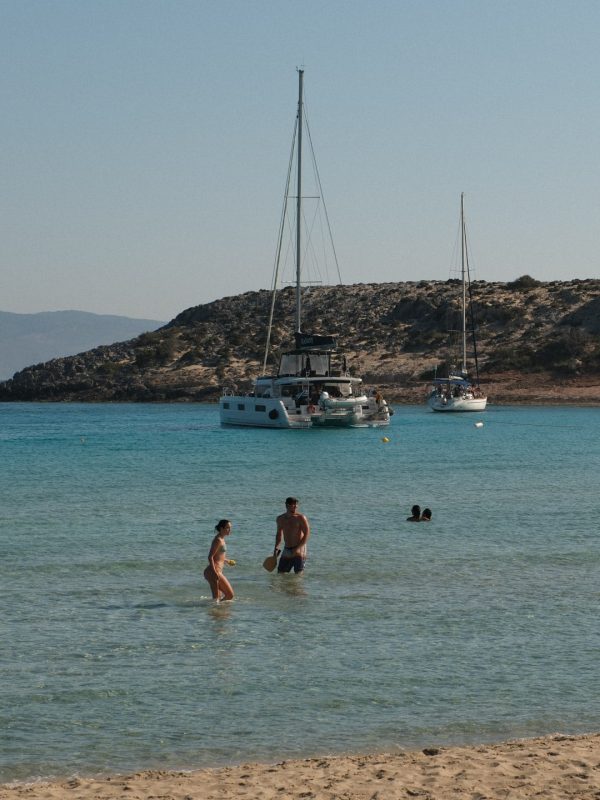
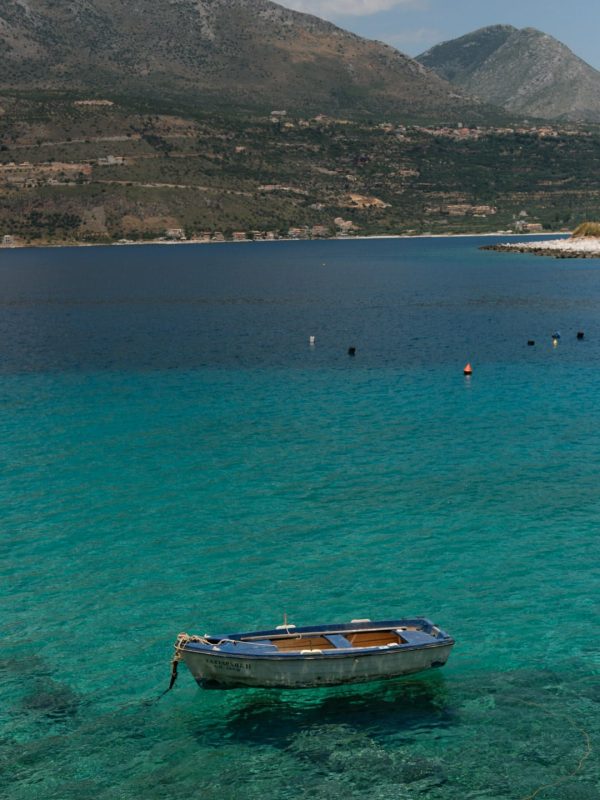
Following this brief stop, we take a short ferry ride to the island of Elafonisos, which lies directly opposite us. With its fine white sand and turquoise sea that rivals the Caribbean, this is the perfect stop to completely shake off the fatigue of the long journey. What’s more, thanks to its wide, unspoilt beaches, being able to run freely along the shore with our dog and enjoy some relaxing moments is one of the most enjoyable parts of our trip.

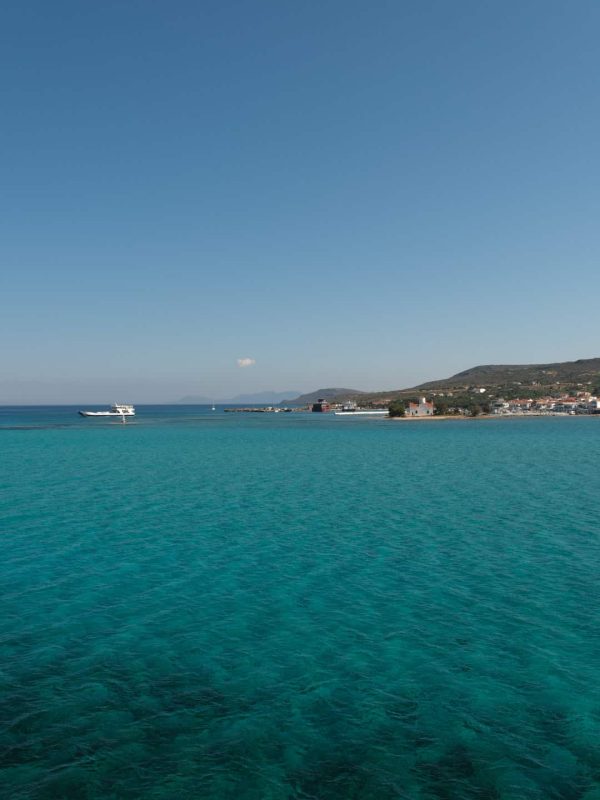




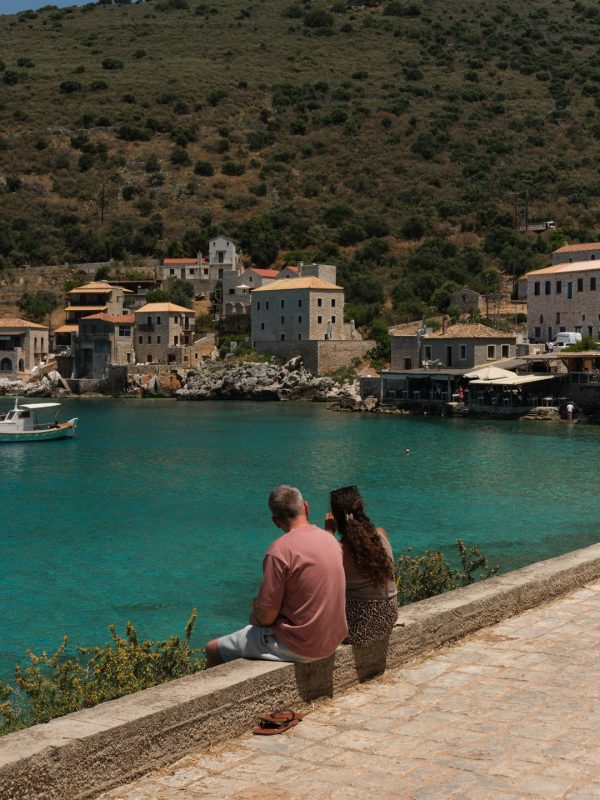
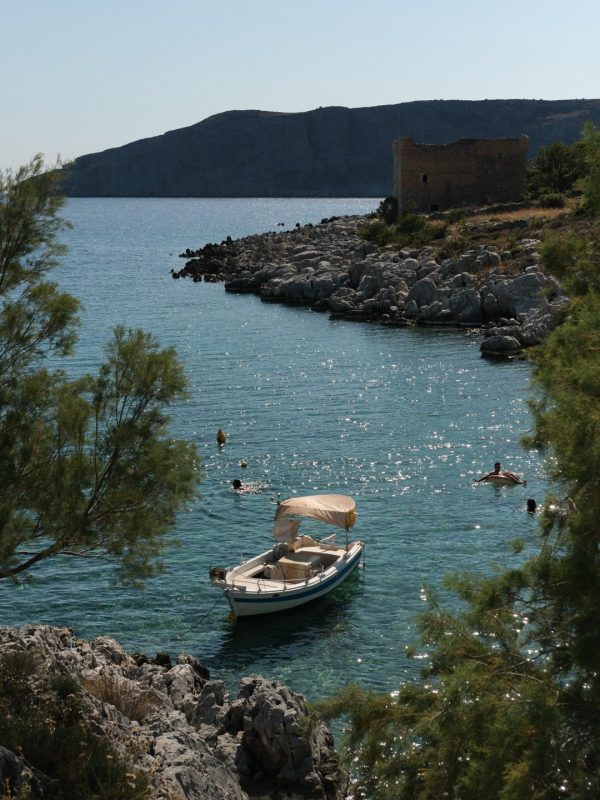


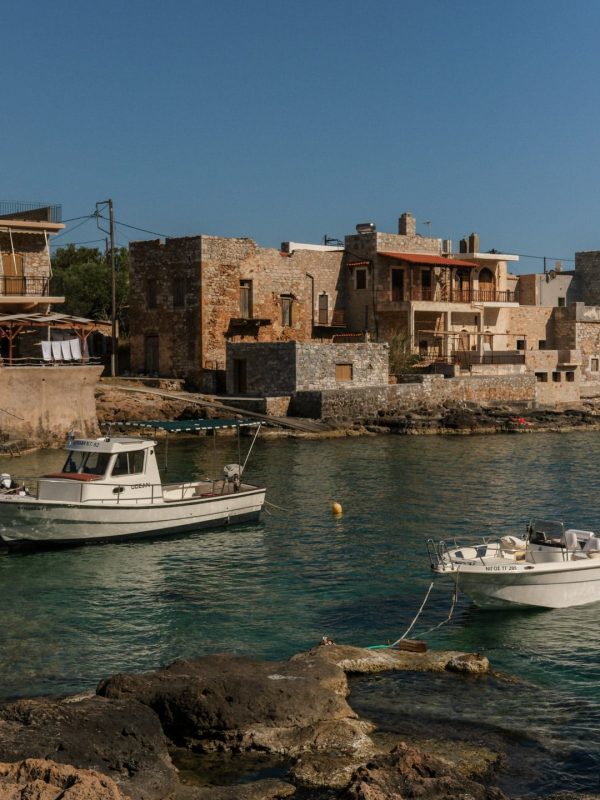

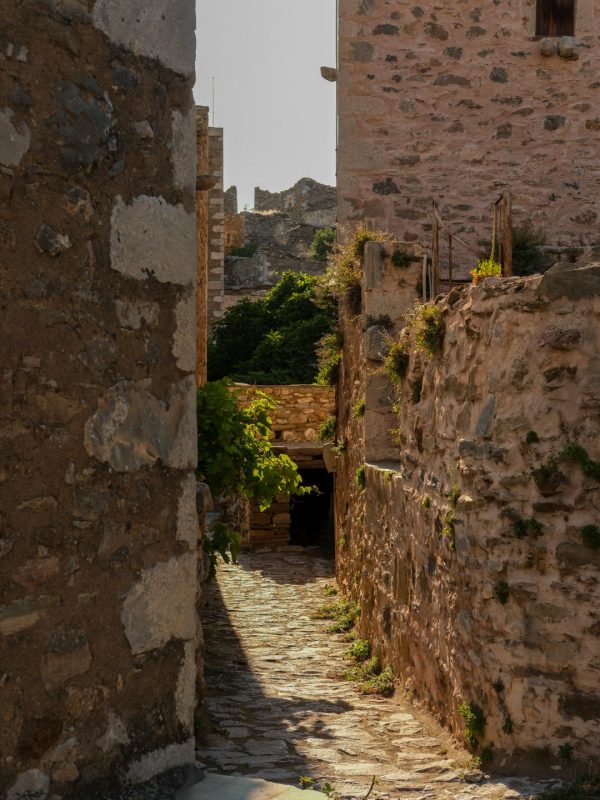



Leaving behind the soothing blue of Elafonisos and after a brief coffee break in Gytheio, we head south towards one of the most remote corners of the Peloponnese: the wild and dramatic landscape of the Mani Peninsula. This place is quite different from the rest of the region; it is harsher, more isolated and possesses a much more distinctive architectural character. This peninsula has been known for centuries for its harsh conditions; in Greek mythology, it was often depicted as ‘the place where the world ends / where all things die’. Indeed, it was believed that at the very tip of the peninsula, where it meets the sea—at the ancient city of Tainaro—there was a passage to the afterlife, and that all living creatures, upon dying, passed through this gateway to the other side.
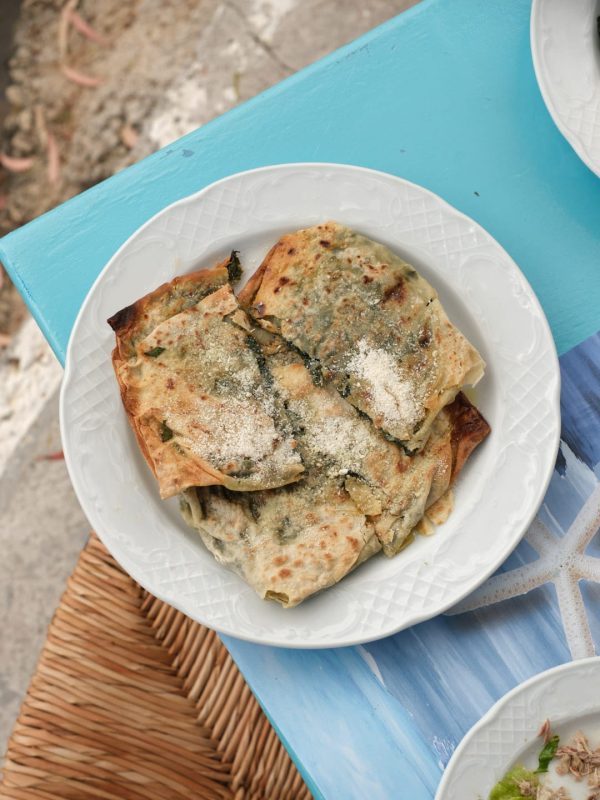
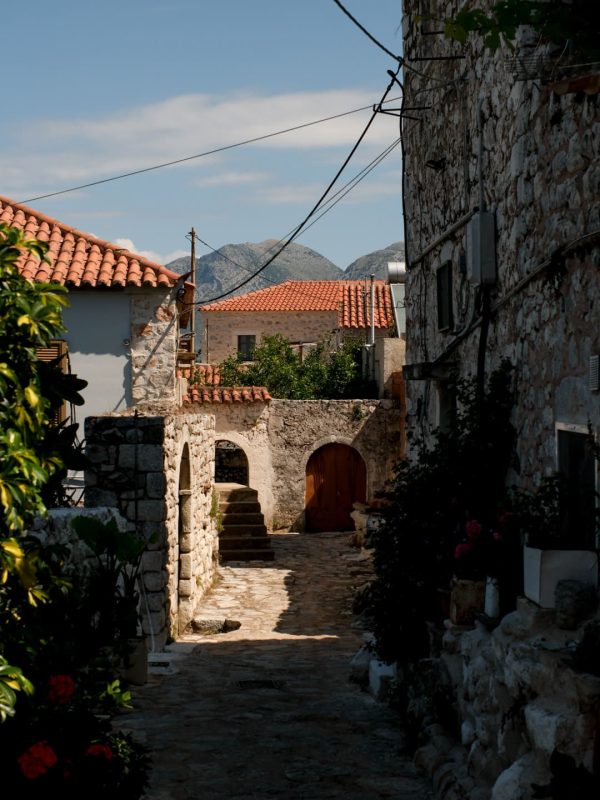
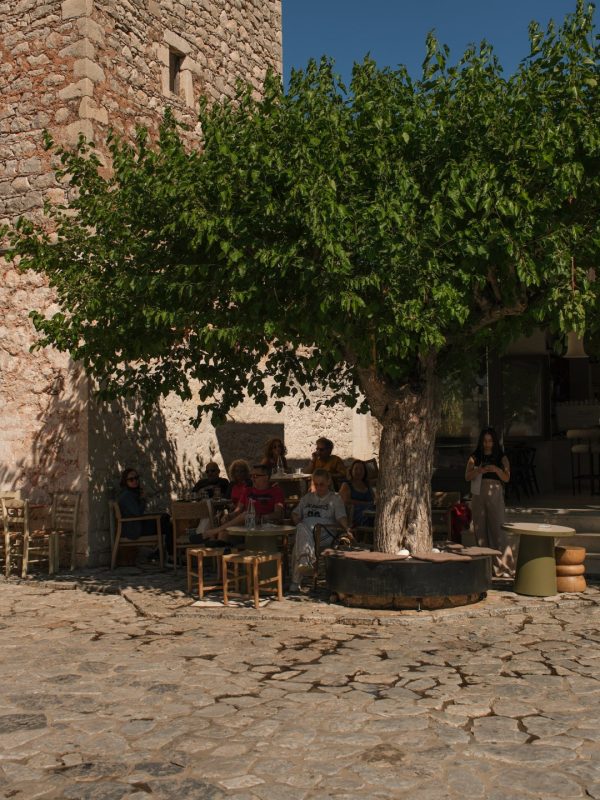
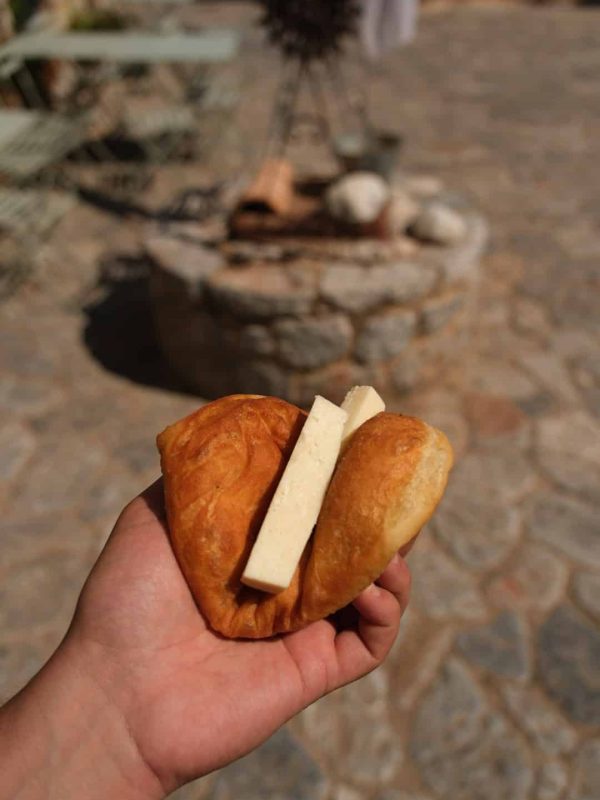
Our first stop in Mani is Aeropoli, with its stone buildings and historic streets. Following the aromas wafting from the town’s traditional bakeries, we buy some of those warm, freshly baked pastries—straight from the oven—filled with a thick slice of fresh cheese. The pastries and the sweet treat—which is rather reminiscent of milk halva—at this historic bakery in Aeropoli are also absolutely delicious.
In a sunny square where we grabbed a quick bite on the go, this simple yet perfect delicacy, authentic Aegean culture’s unpretentious gastronomic heritage is one of the finest examples.
A short drive from Aeropoli takes us to nature’s underground masterpiece, the Cave of Diros. Here, our tour—gliding through the dark, cool waters of the underground river in small rowing boats—offers a breathtaking visual spectacle amidst the massive stalagmites shaped over millions of years, where time seems to stand still. The Peloponnese region is home to many impressive caves; the Kastania Cave, which we visited a few days earlier, featured more interesting formations than this one, but Diros offers a completely different experience due to the presence of water and the opportunity to explore it by boat.
You can buy your tickets for the cave at the ticket office in Diros; as boats depart continuously, you don’t need to wait for a guided tour, but delays are possible on busy days due to the crowds.
After visiting the cave, we head a little further north; Limeni, about 20 minutes away, is our next stop. We’ve arrived in Limeni, unaware of what a stunning cove we’re about to discover, and we’ve also got lunch planned here. Thodora’s Place, which you’ll recognise by its red wooden chairs right on the shore, is where we’ll be having lunch. Here, you can either make use of the facilities or spread out your own towel and cool off in the enchanting blue waters. This beach, known as Dexameni Beach, is definitely a must-see on your Peloponnese itinerary.
As we continue on our way and head further south along the peninsula, the rugged character of the coastline becomes more pronounced. The powerful sound of the waves crashing against the cliffs of Gerolimenas and Vathy begins to accompany our journey. Gerolimenas is a good place to stay if you wish to spend some time in the south of the peninsula. Although it is not a particularly touristy spot, it is clearly undergoing a transformation, and if you’re looking to stay for a day or two, it’s a place that can meet most of your needs. If you do decide to stay here, be sure to add the KaSeas Boutique Hotel to your list.
In Gerolimenas, you can swim straight from the cove and the water looks wonderful, but just a short distance away you can reach a much more enchanting beach, Paralia Gialia.
Paralia Gialia is an unspoilt cove with no facilities apart from a small chapel and a car park. It is one of the most impressive spots on the Mani Peninsula.
After this stop at the beach, we head for Vathia. Vathia is famous for its tower-like houses, perched on a hilltop. Although most of them are abandoned, there are a few hotels and cafés amongst these buildings. If you’d like to enjoy the view and experience the architectural atmosphere of this medieval village, do pop into Vathia.
As you travel along these dramatic and endless coastlines, you come to understand why this landscape—which has also served as the setting for adaptations of the legendary The Odyssey (Odysseia)—is so perfectly suited to epic tales, and you feel that mythological atmosphere right down to your very bones.
What we were looking for on Mani’s winding roads was clear: a cuisine that reflects the region’s authentic character. Aspasia, in the village of Stavri, is exactly that. Chef Stavriani Zervakakou has returned to her roots following a career in Athens and Istanbul (Karaköy Gümrük). This is a laid-back gastronomic destination where the menu changes daily according to what the Aegean has to offer.
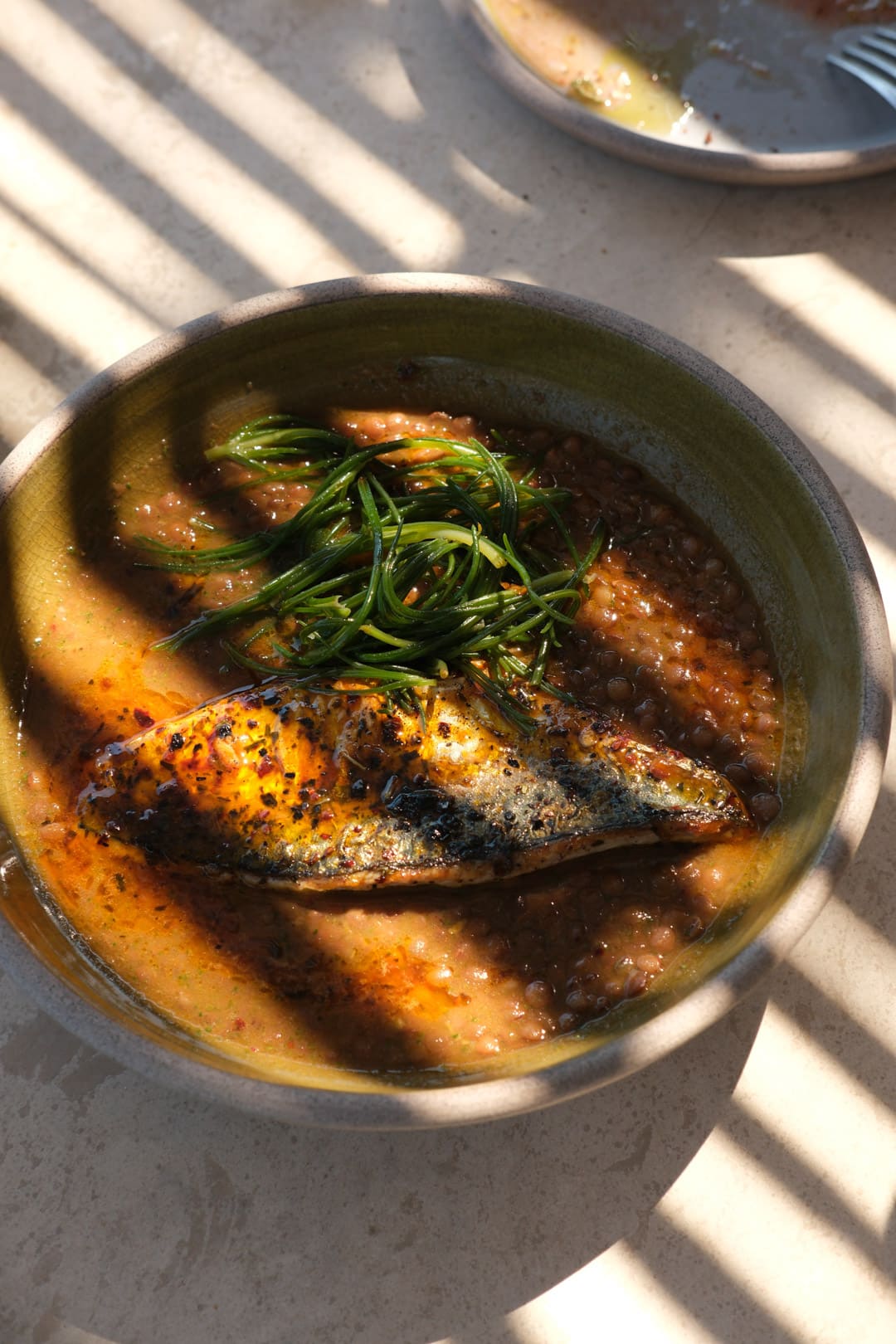
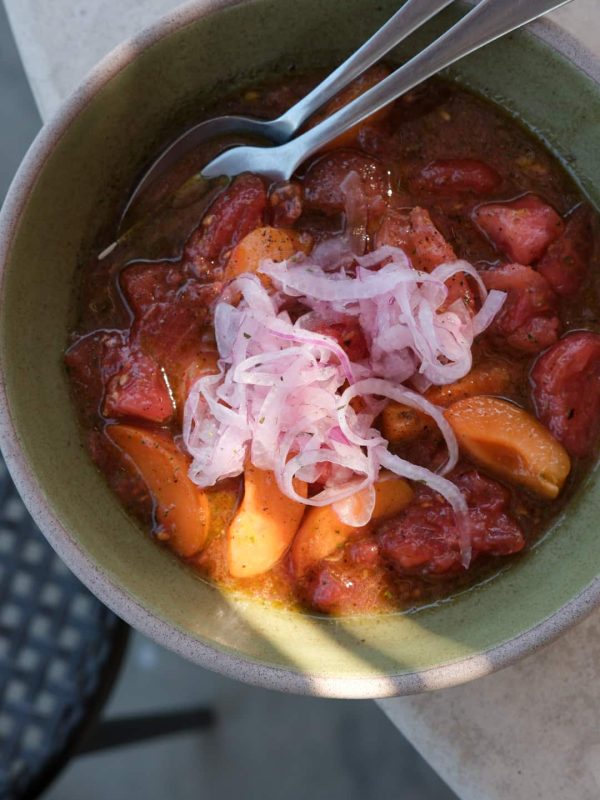
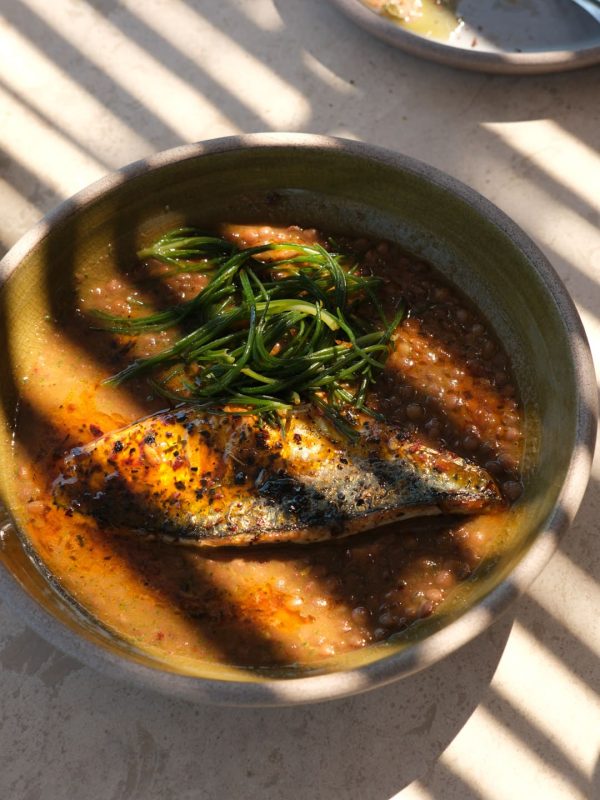
Refined touches that brought out the character of the ingredients were evident in every dish we tried. The marinated red prawns with sea beans and sea bream made for a flawless starter. The salad, with heirloom tomatoes, Vatika onions and apricots, was perfectly balanced. The mackerel in red wine and lentils, alongside the grilled grouper paired with local sausage, were down-to-earth dishes that brought together the region’s maritime and land-based culinary traditions.
For those seeking good food in its seasonal simplicity, Aspasia is a restaurant not to be missed on the Peloponnese route. Sustainability here is not a trend, but the norm.



As we leave Mani’s rugged cliffs behind and wind our way northwards along the west coast, the landscape gradually softens and we are greeted by roads stretching out beneath the shade of endless olive groves. This delightful coastal drive takes us to Kardamyli Old Town, one of the region’s most aesthetically pleasing examples of vernacular architecture. The famous stone tower houses built for defence, characteristic of the Mani region, along with historic churches and ancient stone courtyards, stand before us as the most vivid examples of how traditional life and architectural identity have been preserved.
As the evening sun gradually turns crimson, we take a breather in one of those familiar, cosy tavernas, bathed in soft yellow light and nestled beneath centuries-old olive trees. Accompanied by unpretentious local meze, hearty dishes and local wine, we slowly shake off the weariness of the hectic days we’ve left behind, amidst the gentle murmur of conversation rising from the neighbouring tables. The restaurant we’ve chosen for dinner: Old Kardamili Traditional Restaurant
The hotel we stayed at in Kardamyli was the Hotel Liakoto. The rooms with sea views and balconies are particularly lovely. The beaches are just a short walk from the hotel, though the hotel also has its own swimming pool.
The next morning, before checking out of the hotel, we explore the Old Town and have breakfast with spinach-filled pastries we bought from the only bakery in Kardamyli that was open at that time. We then head for Kalamata, the world-famous capital of olives, where we’ll make our final stop before returning to Athens. Kalamata is about 2–2.5 hours’ drive from Athens. As our arrival in Kalamata coincided with a Sunday, unfortunately most of the city’s museums and attractions were closed, but we explored the town with our guide, Katerina, on a short walk from the castle in the upper town down to the seafront. We agreed to explore Kalamata in more detail – a place that, until recently, had been nothing more than a type of olive to us – and set off for Athens.
We bring this captivating journey—during which we walked to our hearts’ content and sought out authentic flavours—to a close with the unique architectural scenes captured through our viewfinders and flavours that will linger on our palates for a long time to come.

