Apulia

Puglia, lying between the Adriatic and Ionian seas in southeastern Italy, is a Mediterranean dream with its sun-drenched landscapes, endless olive groves, white stone houses and distinctive cuisine.

The region fascinates not only with its nature but also with its characteristic towns and cities. Alberobello with its conical-roofed trulli houses is a fairytale land; Lecce, known as the “Florence of the South” with its baroque buildings, fascinates architecture lovers. Ostuni, with its whitewashed houses built on the hills, is known as “La Città Bianca”. Polignano a Mare looks like a postcard with its houses built on the cliffs and the deep blue sea; Bari is the starting point of the route with its bustling heart of the region, historic streets and life along the coast. Although located in the neighboring Basilicata region, Matera is also an indispensable stop on this journey; with its cave houses and stone texture, it takes you back in time.

Puglia is impressive not only for its sights but also for its cuisine. Flavors such as burrata, orecchiette, taralli and focaccia barese are not just a meal here, but a way of life. This guide has been prepared for those who walk the stone roads of Puglia, who are guests at its tables and who follow the sun.

When to go to Puglia?

Puglia can be visited all year round, but the best time to explore the region is of course spring and autumn. Nature comes to life between March and May, and the seaside season usually begins in mid-June. In September and October, the temperatures are still pleasant and the crowds are fewer.

During the summer months (especially July-August) temperatures can exceed 35 degrees Celsius and the coastal towns can be quite crowded as everyone, including Italians, is on vacation. We do not recommend going during this period.

How to get to Puglia?

It is quite easy to reach Puglia from Turkey. The direct flight from Istanbul to Bari , the capital of the region, takes about 2 hours. Bari has the largest airport in Puglia and is the most preferred point of entry to the region.

There are direct flights from many European cities to Bari and Brindisi , another important airport in the south. Especially in the summer months, flights to these two airports increase; it is possible to find direct flights from Germany, France, Switzerland, England and Scandinavian countries.

For those who want to come by sea, there are ferry services to Bari or Brindisi from port cities such as Albania (Durrës) and Greece (Patras or Igoumenitsa). This route can be an alternative option especially for those traveling by car.

Puglia is also very accessible for those planning to travel by train within Italy. For example, it takes about 3 hours by train from Naples to Bari. High-speed train lines such as Trenitalia or Italo also offer connecting or direct services from major cities such as Rome, Florence and Bologna.

Whichever mode of transportation you choose, when you arrive in Puglia everything slows down – your journey, like life here, is put into slow motion.

We bought our flight tickets through turna.com, using our accumulated points. Turna.com also offers bus, car rental, hotel and ferry services at advantageous prices.

How Many Days Should I Spend in Puglia?

Puglia is a large region; at least 7-8 days is ideal for those who want to visit each city by digesting it. However, if your time is more limited, we recommend at least 5 days to enjoy this region.

Our route was: Bari, Altamura, Matera, Alberobello, Polignano a Mare, Monopoli, Ostuni, Lecce, and back to Bari with a stop in Andria & Trani on the way back.
* Although Matera is located in the neighboring Basilicata region, we think it should be included in the Puglia route.

Transportation in Puglia

Puglia is a region of small towns and villages that are far from each other rather than big cities, so renting a car is almost essential to explore the region freely. Since public transportation options are limited, we strongly recommend renting a car to travel at your own pace and make discoveries along the way.

We booked our car through turna.com before the trip and took delivery as soon as we landed at Bari Airport. The roads in Puglia are not very new, do not expect wide highways. It would be good to choose your vehicle by taking these road conditions into consideration. From time to time it is necessary to deviate from the main road and take narrow village roads or farm roads. Nevertheless, in general, the journey is quite pleasant and the traffic is quite calm. We also had no parking problems in any city.

We were warned about one thing: in the north of the region, especially around Foggia, there are occasional car thefts. We won’t be going to Foggia on this trip , but we rented our car fully insured, and we recommend you do the same – it ‘ s an important detail for peace of mind.

Although we did not use public transportation , there are train and bus services between some cities.
for example:

  • It takes approximately 1 hour and 30 minutes by bus from Bari to Matera.

  • The journey from Bari to Lecce by train takes about 1 hour 40 minutes.

  • The route Bari – Alberobello is more complicated and usually requires a connecting train or bus.

These public transport options can work well for getting between cities, but you may need to plan well in advance if you want to get to smaller towns and villages. The frequency of public transportation is quite low, especially on rural routes. Therefore, renting a car is still the most practical and flexible way.

Accommodation in Puglia

The most authentic and local option to stay in Puglia: Masserias. Converted from historic stone farmhouses, these accommodations are often set in nature, among olive groves or vineyards, allowing you to experience both local architecture and rural life. We think this is the most meaningful accommodation choice. We recommend staying in 2-3 different locations depending on the length of your trip in order to visit the region in the most efficient way.

If you want to be a bit more in the city life: Bari and Lecce
If you want to be closer to the sea: Monopoli, Gallipoli, Tricase
If you aremore gastronomy and culture oriented: Altamura, Alberobello and Otranto

Turna.com is currently offering a 10% discount on hotel bookings until May 31.

The topic we will talk about the most in Puglia will of course be the food. You can review the blog post we prepared on this subject before here. What to eat in Puglia? What are the local dishes and products of Puglia? & you can learn about the culinary philosophy of the region.

You can find all the guides we have prepared for Italy here.

Table of Contents

Good Food Guide

Trattoria/Osteria:

– Cucina Villana cucina etnobotanica
– Antichi Sapori Montegrosso
– Masseria Le Stanzie
– Taverna Del Porto
– Il Cortiletto
– Cibus
– Borgo Antico
– Osteria degli Spiriti
– Ristorante Lido Bianco
– Vini Menhir Salento S.R.L.
– Farmacia dei Sani
– Ristorante L’ACCHIATURA
– L’Orecchietta Enogastronomia

Pizza, Bar & Street Food:

– 400 Gradi Pizza
– Loop Pizza Croccante
– Folia Cocktail Bar & Lab
– Mezzo Quinto
– Il Pizzicotto
– Pescaria
– Tranquillo
– Venezia 40
– Caffè d’Oltremare
– Friggitoria Porto Vecchio

Specialty Coffee & Breakfast
– Caffè Cognetti – Specialty Coffee & Bakery in Bari
– Burro cafe in Ostuni

Bakery, Bread & Focaccia:

– Magda
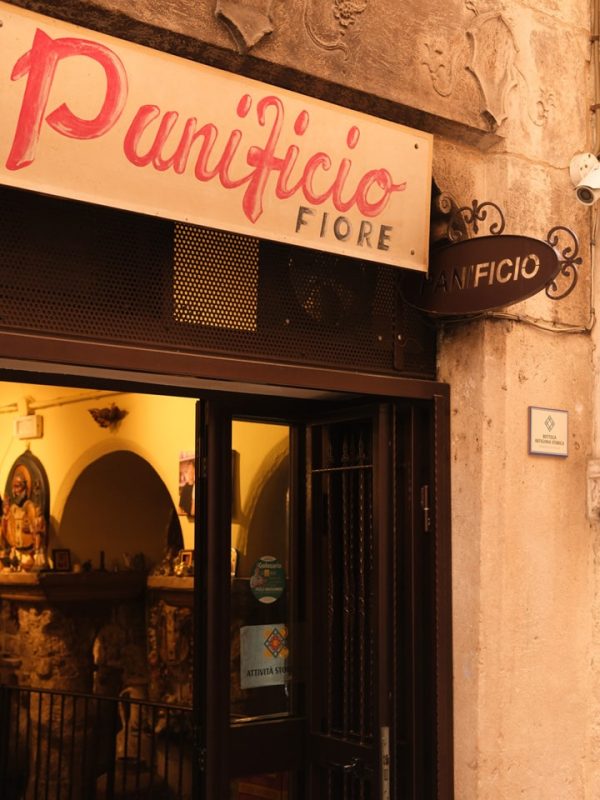
– Panificio Fiore
– Panificio Santa Rita
– Antico Forno Santa Chiara
– Antico Forno Santa Caterina dal 1306
– Staglio Panificati
– Panificio Adriatico
– Natale
– Pasticceria Caffetteria De Pascalis
– Delia | Pasticceria Contemporanea
– Chicchi & Grani

Trattorias/places we were curious about but never had the chance to try:

  • Due Camini
  • Evviva Maria Trattoria Veloce
  • Osteria Botteghe Antiche
  • Orto Ristorante
  • Osteria Caroseno
  • Agriturismo Masseria Barbera
  • La Tradizione
  • U.P.E.P.I.D.D.E. Restaurant
  • PerBacco
  • Il Turacciolo
  • La Cuccagna Giro di Vite
  • Le Zie Trattoria Casereccia
  • La Cucina di Mamma Elvira
  • Trattoria Nonna Tetti
  • aTipica Trattoria Moderna, Lecce
  • Ristorante Lilith
  • Retro Gusto
  • LaltroBaffo Ristorante
  • Vez


Puglia Food & Drink Experiences

The best way to get to know Puglia is through its cuisine. This region , where flavors such as burrata, taralli, focaccia barese and orecchiette were born, has a simple but deep cuisine. The food is unpretentious but the ingredients are so good that you don’t need much. Fresh vegetables, stone baked bread, handmade pasta and olive oil that adds the finishing touch to each plate.. . All of them bear the traces of the sun and the earth.

Puglia is Italy’s biggest olive and durum wheat producer. That’s why bread, pasta and olive oil are taken very seriously here. In this guide, we’ll share both the classic flavors and the small dishes we came across – because Puglia’s cuisine has a simplicity that warms the heart as you get to know it.

  1. Cucina Villana – cucina etnobotanica, Ruvo di Puglia Following a special bond between nature, plants and tradition, this restaurant offers contemporary interpretations of Puglia’s ethnobotanical culinary heritage. The chefs create seasonal menus with ingredients harvested from the surrounding fields and mountains. The menu changes frequently, so they don’t have a printed menu, but the restaurant only serves a tasting menu and the 7-course menu is 60 per person. The menu is completely vegetarian, made from products from the garden, but you don’t need to be vegetarian because the dishes are so impressive that you don’t notice anything missing. A unique stop for those looking for an extraordinary dining experience.
    The restaurant is located in a historic villa that has existed for hundreds of years in the middle of an extremely peaceful garden among olive groves. There are often weddings and events in this magnificent Italian mansion called Villa Fenicia. The Sunday we chose for lunch was one of those days. They acted responsibly by warning us beforehand that it would be busy, and they were always tolerant of our time constraints during the meal. It was one of the most impressive places we have been to recently, both in terms of food and service. We would go back to Puglia just to eat at this restaurant. It is 45 minutes from Bari and 30 minutes from the airport.
  2. Antichi Sapori – Montegrosso is an ideal stop for those who want to experience Puglia cuisine in all its simplicity. Chef Pietro Zito’s kitchen truly implements the farm-to-table philosophy. Prepared with ingredients from his own garden, the dishes are intimate, delicious and memorable. Antichi Sapori is one of the favourite restaurants not only in Puglia but all over Italy. It is considered one of the best trattorias in Italy and one of the favourites of many food critics such as Vedat Milor.
    Chef Pietro Zito’s restaurant was our first restaurant experience on this trip. We opted for the tasting menu , unaware of how many dishes were coming. The menu is €50 per person. This is an incredible price for this service and product variety. The menu starts with antipasti, if I’m not mistaken, 12 kinds of antipasti will fill you up. After we were served two kinds of pasta and three kinds of meat dishes, we learnt that there would be 4 kinds of desserts after the amuse bouche and antipasti. Everything we ate was delicious, this is really one of the restaurants that best describes Puglia. Because simplicity is at the forefront in all dishes. Bari is 1 hour from the city centre and 50 minutes from the airport.
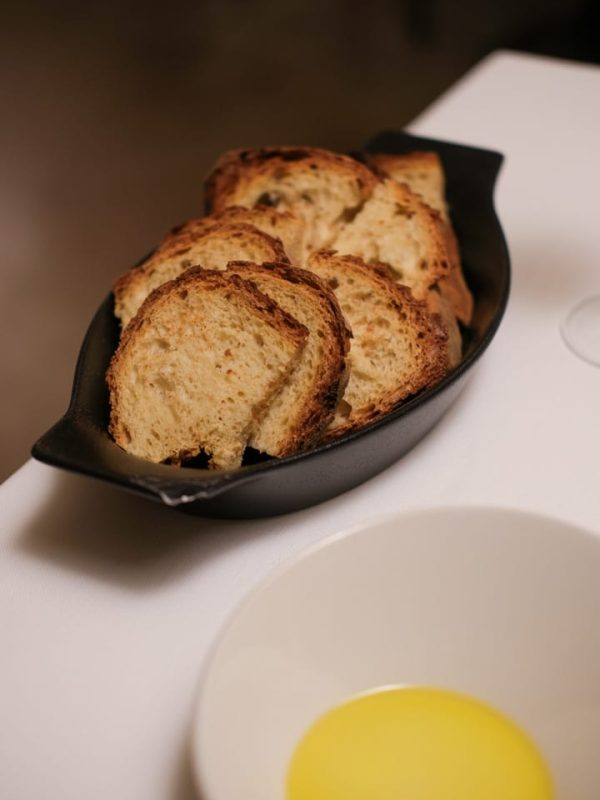
  3. Taverna del Porto – Tricase Porto This restaurant in a harbour town specialises in seafood. Daily catches are transformed into simple but powerful dishes with seasonal ingredients. Marinara pasta and raw seafood stand out. Seafood frittata, fried seafood platter, octopus and seafood linguine were our favourites here. But if you ask me , the most delicious things in the restaurant were the breads. Served with a simple olive oil-tomato sauce, we consumed the bread in seconds. They make the bread themselves in the stone oven on the top floor of the restaurant. Normally we are not very sweet tooth, we usually skip dessert in restaurants unless we are very curious , but here , when the breads were so good , we were sure that the desserts would be good and we were not wrong.
  4. Il Cortiletto – Speziale di Fasano Set in a hidden courtyard, this family-run restaurant offers warm and friendly examples of traditional Puglia cuisine. It is especially noteworthy with its fresh pasta varieties and vegetable starters. This restaurant, which we noted in the book Leziz Günler in Italy by Food Philosophy, where we follow Italy recommendations step by step, looks like a roadside place near Fasano, but it is definitely one of the favourite places of the locals. Here we tried flan with peas, orecchiette served with ragu and meatballs, lasagnotte with broad beans and the chef’s speciality chicken. Again, it is a wonderful trattoria where you can taste each of the ingredients where simplicity is at the forefront. If you want to examine the menu, you can find it here. Il Cortiletto is 15 minutes from Ostuni, 25 minutes from Monopoli and 55 minutes from Bari.
  5. Cibus – Ceglie Messapica is one of the gastronomic centres of Ceglie. Refined presentations are combined with regional recipes and a rich wine cellar. Perfect for those who are fond of local cheeses and meats. Since this place is also included in the Michelin guide, you should definitely make a reservation here like the restaurants above. Here we start by ordering the antipasti, which we were afraid to order again after Antichi Sapori on the first day. Fortunately, a more minimal plate comes, but we still recommend that you start by sharing an antipasti and even share all the plates you eat because the portions are not small at all. You can make a reservation on their website or by email. Cibus is located in the historic centre of Ceglie Messapica, between Ostuni and Martina Franca, 20 minutes from both towns.
  6. Borgo Antico – Gioia del Colle Located in a small settlement between the cities of Bari and Taranto, this restaurant blends traditional and modern flavours. Founded in 2007 by chef Ottavio Giulio Surico and his wife, sommelier Miriam Milano, this place offers original flavours with an emphasis on local ingredients and seasonal produce. The restaurant’s menu varies according to the seasons, but there are some signature dishes such as spaghettoni “Antonio Morella” alla poveraccia and goat fillet served with potatoes. You can find their menu here. About 30 minutes from Alberobello, 40 minutes from Bari and 50 minutes from Taranto.
  7. Osteria degli Spiriti – Lecce A quiet address for a classic evening or lunch in Lecce. It offers traditional dishes served with a sense of presentation worthy of the atmosphere of the Baroque city centre. This is the only classic restaurant we tried in the centre of Lecce. Although they were on the Michelin recommendation list for a long time, they are not on the 2025 list. Although we were a bit cautious because we read both good and bad reviews about this place, we did not leave unhappy with what we ate. Although it is not a restaurant to travel for, it is a restaurant that can be preferred when you are in the centre of Lecce. You can find their website for reservation here.
  8. Ristorante Lido Bianco – Monopoli This seafront restaurant is as impressive with its dishes as its view. Raw seafood is very popular in Puglia, frankly unexpectedly. It is even very common to buy raw seafood directly from the producers at the fish markets. Monopoli, one of the most beautiful cities of Puglia, is also a port city and Lido Bianco, famous for its fresh seafood, is one of the favourite restaurants. Here you can start with shellfish and continue with Tubettini Lido Bianco, which can be described as a fish soup with tomato that reminds me of steamed fish. Reservation is a must, I think you should come at noon or before sunset to enjoy the view. You can find their menu here.
  9. Vini Menhir Salento – Minervino di Lecce This is both a winery and an elegant restaurant, the restaurant part is called Osteria Origano. Wines from the estate’s own vineyards are paired with creative dishes. The evening tasting menu is especially recommended. You can come here just for the wine tasting or you can start with the wine tasting and continue with the tasting menu. The menu with wine pairing and 4 courses is €60 per person. Some memorable dishes were the frittata from the starters and the chicken served with tortellone and lampascioni from the main courses. You can make a reservation here. The restaurant is 30 minutes’ drive from Lecce.
  10. Farmacia dei Sani – Ruffano This restaurant, notable for its name, reinterprets traditional recipes with a fun presentation. As you can guess from the name, this restaurant , converted from an old pharmacy, does not makePuglia dishes. Farmacia dei Sani is a former liquor producer and family restaurant ,but the new generation that took over the restaurant has a more modern approach. Memorable dishes: Roast beef & mackerel sauce reminiscent of Vitello Tonnato, ceviche and spaghettoni with pistachio lemon sauce. Our favourite dessert was ‘chocolate & mushroom’, you can find their menu here. The restaurant is 40 minutes from Lecce.
  11. Ristorante L’Acchiatura – Manduria In the centre of Manduria, surrounded by rustic stone walls, this place offers a great dinner alternative in the region famous for Primitivo wines. We were very pleased with the starters and pastas at this Michelin recommended restaurant. The interior and rooms were very authentic and the service was impeccable. We started with orecchiette and risotto and ordered lamb chops and gnommareddhi. Unfortunately, the gnommareddhi, one of the specialities of Puglia, was very dry and flavourless, and the chops were also very tough. What is gnummareddhi? It is a dish prepared by squeezing lamb or dairy goat offal (liver, lung and kidney) tightly into its own intestines and cooking it together with giant parsley leaves and carosello (wild fennel seeds).
    When we were unhappy with our main courses, we resorted to a reliable way and ordered tiramisu. Although it was a strange presentation to be served in mokapot, we left the restaurant happy with a delicious tiramisu. You can find the menu of the restaurant here. The restaurant is 20 minutes from Gallipoli and 40 minutes from Lecce.
  12. Masseria Le Stanzie, Supersano: Le Stanzie is a masseria, a historic farmhouse in the town of Supersano. With a history dating back to the 1500s, this place offers visitors the opportunity to experience the traditional cuisine and rural life of Salento.

    Masserias attract attention with its menu prepared with products grown in its own fields. Dishes vary seasonally, with homemade pasta, fresh vegetables and local meat products. Highlights include sagne ‘ncannulate (homemade pasta), pancotto soup and massa e ceci (pasta with chickpeas).

    The atmosphere is warm and inviting, with stone-walled rooms, interiors decorated with dried tomatoes and peppers hanging from the ceilings, and outdoor dining areas in summer. Visitors can explore the old olive oil presses and other historical sites with guided tours before the meal. We went a little earlier than our reservation time and came across a concert in the garden specially organised for a tourist group. Horses running in the garden, sunset, melodies from the Puglia dialect, dances… it was extremely impressive.

    Masseria Le Stanzie is the ideal destination for those who want to experience authentic Puglia cuisine and rural life. You can make a reservation by Whatsapp or by mail. Their website is here. Le Stanzie is 35 minutes from both Gallipoli and Lecce.

Bonus Baccanti, Matera

Baccanti Ristorante is an elegant restaurant in the historic Sassi district of Matera , one of the oldest cities in Italy, in a unique atmosphere carved into ancient caves. Listed in the Michelin Guide, this place offers traditional Lucania cuisine with modern and creative touches. After the delicious meals we had in the Puglia region, we may have found this place a bit weak, unfortunately we did not taste very memorable flavours.

The restaurant’s menu offers original flavours prepared with high quality ingredients sourced from local producers. Dishes we tried: Tiramisù di funghi Cardoncelli – an interpretation of tiramisu with a savoury cream made with Cardoncelli mushrooms, Gnocchi di Pane – a type of gnocchi made with Matera’s famous bread and lamb chops, one of the signature dishes of the restaurant. The wine list is quite extensive, especially focusing on wines from local producers.

Bonus #2: Bro’s Trattoria – Martina Franca: A restaurant you should avoid in Puglia.
Bros, which previously had a starred restaurant in Lecce but lost its star, recently opened a new trattoria in Martina Franca. From the greeting to the service, they failed in all aspects. Although they could present the simple flavours of the region such as panzerotti and focaccia well, there was a salt balance problem in all dishes. Unfortunately, we had to send back some dishes such as pignate without being able to eat them. The dessert, which looked delicious but was never flavourful and took hours to be served, was a bad ending to an evening that did not start well. We can’t comment on the wines because we asked for the wine list twice but the wine menu never arrived. By the way, the restaurant was not crowded, we think there were about five tables.

Apulia Travel Guide

Although Puglia is a little out of the classical Italian routes, it is a region that is engraved in the memory of everyone who discovers it. Here, rather than magnificent museums, slow life, stone streets, endless olive groves and small towns leaning against the shores stand out. This region, which harbours a different character in every corner, should be experienced as a whole. Nevertheless, we have listed some stops that should not be missed for first-timers.

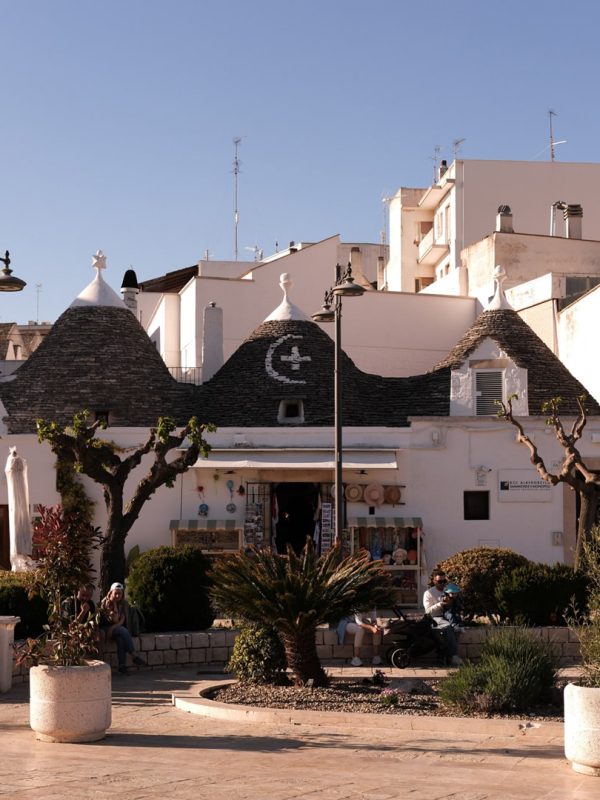
  1. Alberobello Alberobello, a UNESCO World Heritage Site with its trulli houses with conical roofs, is one of the symbolic towns of Puglia. These white stone houses were built without mortar and have been standing for centuries. The neighbourhoods of Rione Monti and Aia Piccola can be visited on foot.
  2. Lecce Lecce , considered the capital of Baroque architecture, is known as the “Florence of the South” for its ornate stone facades. The Basilica of Santa Croce and Piazza del Duomo are a must -see. The city is also famous for its handicrafts. MUSTin Lecce(Museo Storico Città di Lecce), Museo Faggiano and Museo Sigismondo Castromediano museums can be visited for archaeology enthusiasts, and Progetto art gallery for contemporary art exhibitions .
  3. Ostuni Ostuni , known as the”White City”, has a fascinating view with its white houses built on the hill. Wandering through the streets of the old town is an experience in itself.
  4. Polignano a Mare This seaside town built on the cliffs is known for its deep blue sea and small beaches. You can swim at Lama Monachile beach and take in the view from the statue of Domenico Modugno.
  5. Monopoli With its colourful harbour, narrow streets and lively evenings, Monopoli is one of the liveliest towns in Puglia. Especially the old town and the seaside walls are worth seeing.
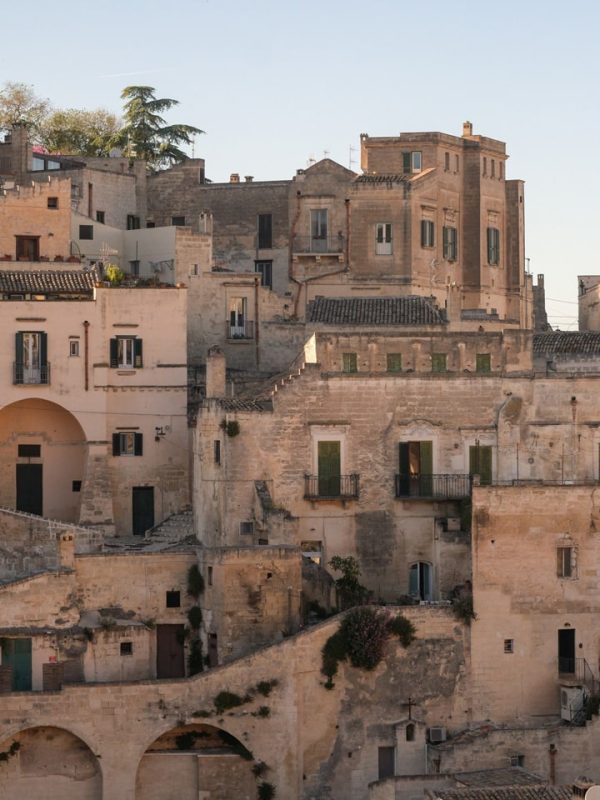
  6. Matera Although not technically in Puglia, it would be impossible not to include Matera, which is very close to the region, in this list. With its houses carved into caves and stone architecture, it gives the feeling of being in another world. The Sassi district and the church of Santa Maria de Idris are highlights.
  7. Bari Bari, the capital of the region, is a delightful starting point with its historic centre (Bari Vecchia), the Basilica of San Nicola and walking paths along the coast. Bari is generally less visited than other tourist destinations in Puglia, such as Alberobello, Ostuni and Lecce, but as the largest city in the region it is very lively and definitely deserves a day here. In Bari, you should visit the street called Arco Basso to see the nonnas making orecchiette pasta, Palazzo Fizzarotti and Palazzo Mincuzzi for architecture lovers, Castello Svevo di Bari, Museo NicolaianoMuseo Nicolaiano, Museo Archeologico di Santa Scolastica, Pinacoteca metropolitana di Bari and Basilica Cattedrale Metropolitana Primaziale San Sabino. There is also a Ferris wheel in Bari where you can watch the city panoramic 🙂
  8. Locorotondo It is like an open-air setting with its round layout, whitewashed houses and flowered balconies. It is a quiet and peaceful town.
  9. Cisternino This small town, famous for its meat restaurants (macelleria), is the perfect place to eat on the street with the locals, especially in the evening.
  10. Martina Franca Known for its baroque buildings, lively market and festival atmosphere, this city is one of the centers of the Valle d’Itria region. It is especially lively in the summer months.
  11. Gallipoli Located on the west coast of the Salento peninsula, Gallipoli stands out for both its historic centre and its deep blue beaches. Watching the sunset in the old town in the evening is unforgettable.
  12. Otranto This small town on the Adriatic coast is worth seeing for its historic port, cathedral famous for its mosaics and crystal clear sea. It is also known as the easternmost point of Italy. It was briefly occupied by the Ottoman Empire.
  13. Santa Maria di Leuca Located at the southernmost tip of Salento, Santa Maria di Leuca is situated at the point where the Adriatic and Ionian seas meet. This city, famous for its lighthouse and coastal walks, is very lively in the summer months. It is a great spot if you want to be close to the sea, because you are at the point where the Ionian and Adriatic seas meet. Unlike other areas, there are many impressive villas here. Architecture enthusiasts can also come to examine these structures.
  14. Altamura Famous for its unique bread, Altamura also stands out for its well-preserved medieval streets and cathedral, making it an ideal stop for gastronomy enthusiasts.
  15. Trani Trani, in the north of Puglia, is a charming place by the sea, with its Romanesque architecture. Its seaside cathedral and port are a great place for an evening walk. It was the least impressive of the settlements we saw, perhaps because we arrived last.

Alberobello

The conical-roofed trulli houses of Alberobello. Here’s what you need to know about these unique structures in 10 things:

1. What is Trulli? “Trullo” (plural “trulli”), traditional stone-walled houses with conical roofs, typical of the Puglia region. They areusually built with the dry stone technique, i.e. without the use of mortar.

2. Historical Origins: The origin of Trulli houses dates back to the 14th century. In the 15th century, to avoid the tax laws of the Kingdom of Naples, these houses were built to be easily dismantled. It is thought that when the tax officials came, the roofs were removed and the houses were made to look like temporary structures, thus avoiding tax payments.

3. UNESCO World Heritage Site: These buildings are most concentrated in Alberobello. Alberobello Trulli houses were recognised as a UNESCO World Heritage Site in 1996. There are more than 1,500 trullo in the area.

4. Trulli Architecture: The roofs are made of stones placed on top of each other and usually plastered with white lime.

5. Climate Compatibility: Thick stone walls provide a cool interior in summer and a warm interior in winter.

6. Harran Houses: The cluster houses in the Harran region of Şanlıurfa are architecturally very similar to the Trulli houses. Although both buildings have conical roofs and are made of stone, Harran is unfortunately far behind Alberobello in terms of conservation and tourism.

7. Trullo Sovrano: Considered as the largest trullo in Alberobello, Sovrano can be visited as a museum today.

8. Usage: Trulli houses are mostly used for accommodation purposes today , but they are also used for touristic purposes such as restaurants and cafes.

9. Symbols: On the conical roofs of Trulli houses you will see conspicuous white symbols. These symbols, often drawn for protective purposes, were believed to increase the luck of the house or keep evil spirits away.

10. Casa d’Amore: Casa d’Amore, a landmark in the history of Alberobello, stands out as the first building built after King Ferdinand IV officially recognised the city in 1797. Francesco D’Amore, the owner of the house, built the first permanent building with royal permission, breaking the “temporary” building requirement of the local counts. There is an inscription in Latin on the house: “The first to be built under royal authorisation.”

Bonus: Trullo Migration: These structures can be found not only in Puglia but also among the vineyards of the Rhineland region of Germany. Workers who migrated from Puglia to Germany for economic reasons in the 18th century engaged in viticulture and used familiar construction techniques in these lands that resembled the rural conditions they were accustomed to.

It is not known exactly why they built these houses, although some say it was to meet temporary shelter conditions, while others say it was out of longing for the homeland they left behind. Even hundreds of kilometers away, the trulli provided them with a safe and familiar home.

Where to Swim in Puglia?

Where to Swim in Puglia: A Guide to the Most Beautiful Beaches and Coves

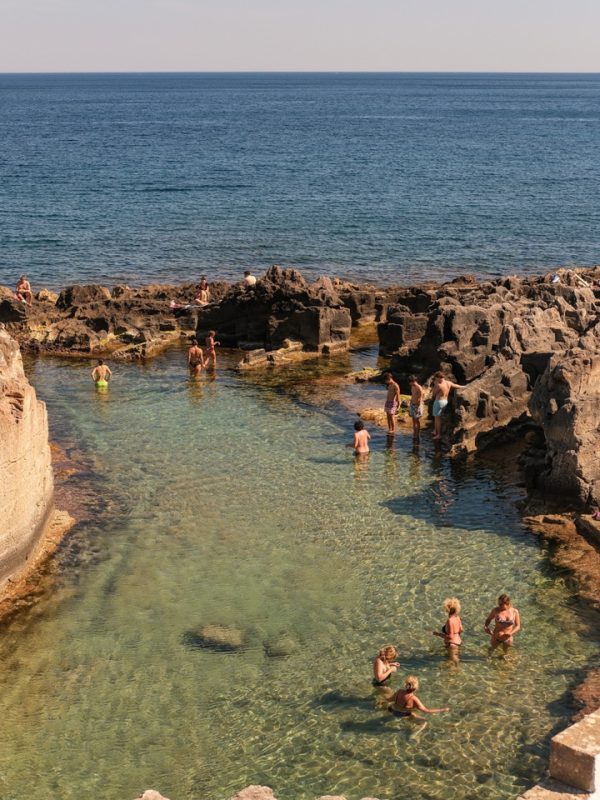
There are many options for swimming in Puglia: rocky shores, golden sand beaches, hidden coves, natural pools and caves. We were there at the beginning of May on this trip — the sea was still cool but the weather was sunny and we saw many people swimming. If you prefer warm seas, the beginning of May may be a bit early, but it is a great time to swim calmly, away from the crowds and enjoy nature. The choice is yours.

We generally prefer free, unoperated bays instead of beach clubs. For us, even a shower by the sea is enough. Of course, there are many alternatives for different tastes: swimming in caves that you can reach by boat, jumping off cliffs, watching the sunset on sandy beaches or lying down facing the sea with a cocktail…

We discovered many swimming spots on this trip, some we just visited but most we recorded. Some are remembered for their scenery, some for the clarity of the water. Below you will find a list ranging from our favorite places to swim to must-see spots for their scenery:

Favorite Swimming Spots and Bays to Visit:

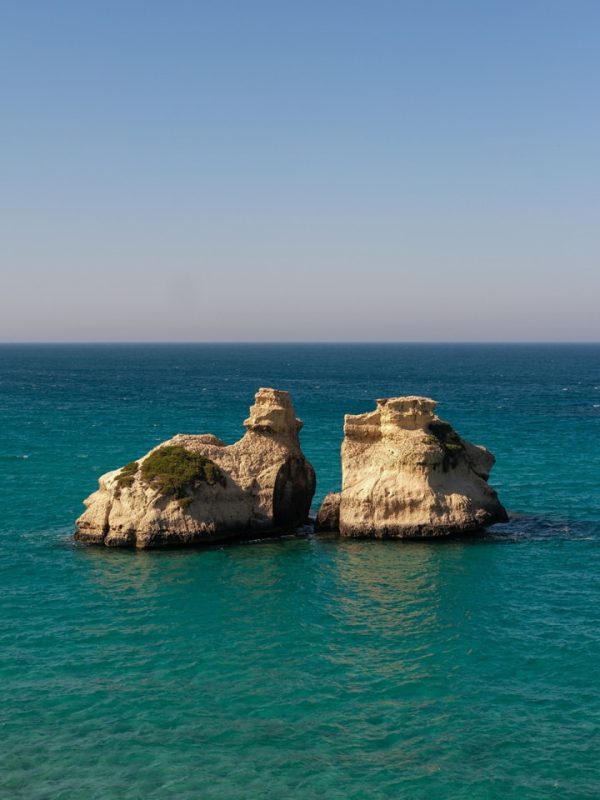
  • Torre dell’Orso & Le Due Sorelle: A postcard-like landscape with fine sand, calm sea and the iconic “Two Sisters” cliffs.

  • Il Ciolo: Just looking at the sea from high cliffs is an experience in itself.

  • Cave of Poetry: Like a natural pool. It deserves its poetic name.

  • Cala dell’Acquaviva: A tiny but calm bay with crystal clear waters that is introverted.

  • Spiaggia di Pescoluse (Maldivi del Salento): A vast, tropical-looking beach.

  • Baia dei Turchi: A golden beach that you can reach through pine forests.

  • Faraglioni di Sant’Andrea: Swimming among natural rock formations is a unique feeling.

  • Porto Miggiano & Porto Badisco: Two less known bays but definitely worth exploring.

  • Cala Sala (Port’alga) & Cala Torre Cintola: Especially suitable for diving and snorkeling.

  • Spiaggia di Torre Pozzelle: A quieter and lesser-known alternative.

  • Porto Bianco (Monopoli): It is in the city but it is a very beautiful sea.

  • Lama Monachile (Polignano a Mare): It is a must see for its view.

  • San Pietro in Bevagna & Campomarino Dunes: Wide beaches surrounded by sand dunes.

  • Spiaggia e Piscina Naturale di Marina Serra: It resembles a natural swimming pool.

  • Bagno Marino Archi & Tricase Porto: Ideal for both swimming and watching the sunset.


Each one tells a different story; we think you should definitely add a few to your trip. Swimming in Puglia is not just about swimming in the sea — it’s about connecting with nature, light, stones and time. 💙

Matera

Just 1 hour away from Bari, there is a hidden city in the south of Italy: MATERA 🇮🇹 Being one of the oldest settlements in the world, this small city is definitely one of the stops you should add to your route with its structures carved into stones and thousands of years of history.

If you are planning a trip to Matera, here are the places you should save:

• Sassi di Matera – Historic area with cave settlements
• Casa Grotta di Vico Solitario – A preserved example of traditional life
• Matera Cathedral (Duomo) – A historic structure dominating the city’s skyline
• Palombaro Lungo – A huge underground water cistern
• Santa Maria de Idris – An impressive church carved into the rock
• Murgia Park – For nature walks and views of the Sassi
• Casa Noha – A multimedia experience that tells the city’s striking past
• Belvedere Murgia Timone – An impressive viewing point, especially at sunset
• Via Muro – The iconic street you’ll remember from the movie No Time to Die


Matera is a city considered to be one of the oldest continuously inhabited places in the world. The settlement dates back to prehistoric times, to caves carved into the rocks. The Sassi area, formed by these cave houses, is the most characteristic part of the city landscape.

Until the 1950s, thousands of people lived here without basic infrastructure. Due to these conditions, Matera became a symbol of poverty for a long time. Writer Carlo Levi compared the Sassi to “Dante’s Hell.” The state intervened and moved the people to new housing, and the Sassi remained largely empty.

The city, which remained silent for many years, began to attract attention again after being included on the UNESCO World Heritage List in 1993. With its selection as the European Capital of Culture in 2019, Matera has undergone a major transformation in cultural and touristic terms.

Today, abandoned caves have been transformed into hotels, galleries and restaurants. The city has also hosted many international films: No Time to Die, Ben-Hur, Wonder Woman and Pasolini’s The Gospel of Matthew were filmed here. Via Muro in particular has become a must-see for cinema enthusiasts.

Matera’s cuisine reflects the simple yet characterful nature of the region. Among the recipes prepared with the cucina povera approach, which leaves no room for waste, acquasala (a dish made with stale bread, tomatoes, onions, peppers and eggs) and crapiata (a traditional soup made with grains and vegetables) stand out.

Today, Matera offers its visitors a powerful experience not only with its history but also with its daily life. With its architectural heritage, cuisine, urban texture and past, it is an impressive alternative for those looking for an original stop off the beaten track in southern Italy.

The Festa della Madonna della Bruna, held every year on July 2, is Matera’s largest and most established public festival. Celebrated for over 600 years, this tradition is dedicated to the city’s patron saint, Madonna della Bruna.

The day begins with religious ceremonies from early morning. In the afternoon, a huge decorated carriage (carro trionfale) carrying a statue of the Madonna is driven around the city. In the evening, the carriage is broken into pieces in front of the crowd — symbolizing the destruction of evil and renewal. Snatching the pieces is considered good luck.

At the end of the night, the sky lights up with fireworks. This festival, both religious and theatrical, has a very important place in Matera’s collective memory. If your visit falls on this date, it will be unforgettable to see how the city’s ordinary stone walls are transformed into a carnival.

13 Movies That Will Transport You to Southern Italy: Italy in Cinema

Cobblestone streets, olive trees, washing waving on the seashore… 13 films together that take you from Sicily to Amalfi, from Lecce to Naples with the magic of cinema. At the intersection of Southern Italy and cinema, there is an important director for us, Ferzan Özpetek. His films always involve crowded tables, identity conflicts, rural Italy and music. Naturally, he has three of his films on this list.

Mine Vaganti (Loose Cannons) – 2010 – IMDb: 7.2/10
The Ferzan Özpetek film, remembered for its food scenes, was shot in the historical atmosphere of Lecce. A comedy that includes identity conflicts within a traditional family and Sezen Aksu songs.

The Hand of God (2021) – IMDb: 7.3/10
Directed by Paolo Sorrentino, this semi-autobiographical film tells the story of Maradona madness and a teenager’s personal transformation in 1980s Naples.

Il Postino (The Postman) – 1994 – IMDb: 7.8/10
This film, etched in memories with the line “Poetry does not belong to the one who writes it; it belongs to the one who needs it,” is about the friendship that poet Pablo Neruda formed with a postman during his years of exile on the island of Procida.

Cinema Paradiso (1988) – IMDb: 8.5/10
This Oscar-winning masterpiece directed by Giuseppe Tornatore tells the story of a boy who grew up in a small town in Sicily with a love of cinema and became a director.

La Dea Fortuna (2019) – IMDb: 6.7/10
In this film by Ferzan Özpetek, set in Rome, the cultural conflicts between modern relationships and the traditional southern family structure come to the fore.

The Talented Mr. Ripley (1999) – IMDb: 7.4/10
This film, which engraves the Amalfi coast and its endless stairs in our memories, was recently adapted into a black-and-white series on Netflix with the same name.

Malèna (2000) – IMDb: 7.4/10
Directed by Giuseppe Tornatore, this film tells the story of a young boy’s growing pains in Sicily in the 1940s through his love for a mysterious woman.

Love Is All You Need (2012) – IMDb: 6.5/10
Directed by Susanne Bier, this romantic drama is set in Positano and Sorrento and brings to the screen the contemporary face of the Amalfi Coast.

Le Quattro Volte (2010) – IMDb: 7.2/10
Calabria’nın dağ köylerinden birinde geçen bu diyalogsuz film, bir keçi çobanının yaşamı üzerinden doğa, ruh ve döngüsellik üzerine sinematik bir meditasyon sunuyor.

Avanti! (1972) – IMDb: 7.2/10
Directed by Billy Wilder, this romantic comedy is a fun story set against the backdrop of Amalfi’s magical hotels and beaches.

Allacciate le cinture (Fasten Your Seatbelts) – 2014 – IMDb: 6.5/10
Another Özpetek film and we are in Lecce again. A modern love story intertwined with architecture and transformation.

Il Gattopardo (The Leopard) – 1963 – IMDb: 7.9/10
In this film, one of the masterpieces of the famous director Luchino Visconti, we watch the collapse of the aristocracy and the rise of new elites in Sicily during the unification process of Italy. A mini-series with the same name has recently come to Netflix.

Il Bene Mio (2018) – IMDb: 6.5/10
Directed by Pippo Mezzapesa, this film focuses on the memory and resistance of a town abandoned after the earthquake in Puglia.

Arama

Search